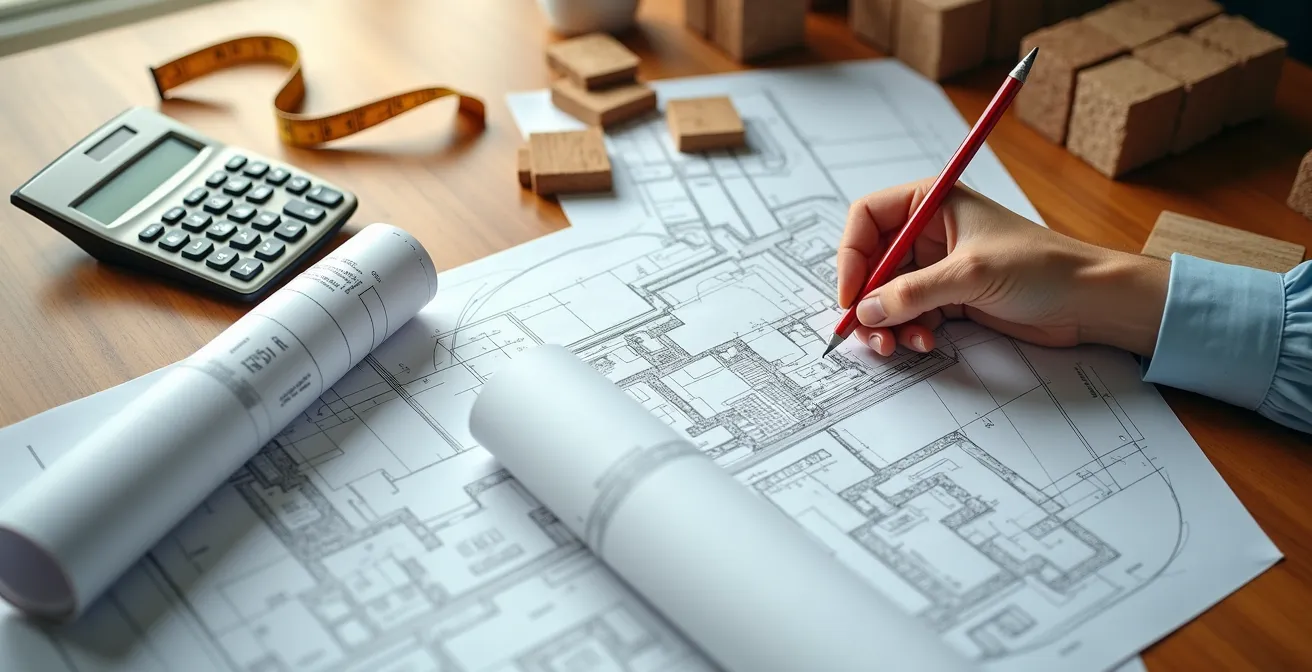
Your home’s insurance value has nothing to do with its market price or tax assessment; it is a forensic calculation of post-disaster reconstruction costs, a figure you must engineer yourself to avoid financial ruin.
- Rebuilding costs are driven by material prices, skilled labor availability, and demand surge after a disaster—not by Zillow estimates.
- Custom features, unpermitted additions, and foundational integrity are major financial risks often ignored by standard insurance calculators.
Recommendation: Shift your mindset from a homeowner to a risk engineer. Proactively audit your property’s specific vulnerabilities and material composition to build a precise, defensible replacement cost value.
As the owner of a custom-built home, you operate in a different reality from most. You understand that the market value of your property—what someone might pay for it—is a poor proxy for its intrinsic worth. Yet, many owners fall into the trap of assuming this value, or the even more misleading tax assessment value, provides adequate protection. This is a critical and potentially catastrophic financial error. Standard valuation methods are blunt instruments, incapable of accounting for the craftsmanship, materials, and unique architectural DNA of a non-standard home.
The common advice to “use an online calculator” or “check your tax bill” is not just inadequate; it’s dangerous. These tools are designed for mass-market properties and fail spectacularly when faced with custom millwork, historic elements, or advanced construction techniques. The result is a pervasive and silent threat. In fact, a significant number of homes are underinsured, leaving their owners exposed to massive out-of-pocket expenses in the event of a total loss. This isn’t just about losing a house; it’s about being financially unable to rebuild the home you painstakingly created.
But what if the key wasn’t to find a better calculator, but to adopt a fundamentally different methodology? The true path to accurate coverage lies in thinking not like an appraiser, but like a construction cost estimator or a risk engineer. It requires a forensic examination of your dwelling, a deep understanding of post-disaster reconstruction dynamics, and a granular assessment of every component that makes your home unique. This guide will walk you through that precise process, providing the technical framework to deconstruct your home’s value and ensure your insurance policy is a true shield, not a hollow promise.
For those who prefer a visual summary, the following video breaks down the crucial difference between what you owe on a loan and what it truly costs to rebuild, a foundational concept for proper insurance.
This article provides a structured approach, breaking down the complex task of calculating your dwelling’s true rebuild cost into a series of technical assessments. Each section addresses a critical variable that standard formulas miss, empowering you to build an accurate and defensible valuation for your custom home.
Summary: A Technical Guide to Calculating Dwelling Rebuild Costs
- Why Your Tax Assessment Has Nothing to Do with Insurance Coverage?
- How to Insure Custom Moldings and Historic Features Correctly?
- Wood or Brick: How Construction Materials Impact Your Premium and Payout?
- The Unpermitted Addition That Could Void Your Dwelling Coverage
- When to Inspect Your Foundation: The Cracks That Insurance Won’t Fix
- How Does “New for Old” Coverage Actually Work in a Claim?
- Standard vs Upgrade: Which Finishes Should You Sacrifice to Stay on Budget?
- How to Assess Your Property Vulnerability Like a Risk Engineer?
Why Your Tax Assessment Has Nothing to Do with Insurance Coverage?
The most common and dangerous misconception is equating a home’s tax assessed value with its replacement cost. This fundamental error is a primary reason why an estimated 64% of homes are underinsured, according to CoreLogic data. The two figures are calculated for entirely different purposes using starkly different methodologies. A tax assessment’s goal is to create an equitable basis for levying property taxes across a municipality, often using mass appraisal algorithms that prioritize uniformity over individual accuracy.
In contrast, an insurance valuation—or replacement cost value (RCV)—has a singular, precise function: to determine the exact dollar amount required to reconstruct your specific home from the ground up after a catastrophic loss. This calculation is hyper-focused and must account for post-disaster realities. Crucially, tax assessments include the value of your land, which is irrelevant to an insurer as land cannot be destroyed by fire or wind. An RCV calculation strips out land value and focuses exclusively on the structure itself.
Furthermore, insurance valuations must factor in the current costs of materials, specialized labor, demolition of the old structure, debris removal, and compliance with updated building codes—all elements absent from a tax assessor’s model. Relying on your tax statement for your coverage limit is not a conservative estimate; it is an unrelated metric that creates a false sense of security. The only path to an accurate figure is a detailed, structure-focused analysis.
How to Insure Custom Moldings and Historic Features Correctly?
For owners of custom or historic homes, standard cost-per-square-foot calculations are guaranteed to fail. These formulas are designed for modern, homogenous construction and cannot account for features that are difficult or expensive to replicate. Elements like hand-carved crown molding, ornate plasterwork, antique stained-glass windows, or a slate roof demand a feature-specific valuation approach. The cost to replace these items is not determined by their size, but by the availability of artisans skilled enough to recreate them.
The process of insuring these features correctly begins with meticulous documentation. A professional appraiser specializing in historic properties will not just measure square footage; they will conduct a detailed photographic and video survey of each unique element. This visual record becomes the basis for researching the market rates for the specialized craftspeople required for replication. This is a critical distinction: you are not insuring a “roof,” you are insuring the cost of a master slater’s time and the sourcing of period-appropriate materials.
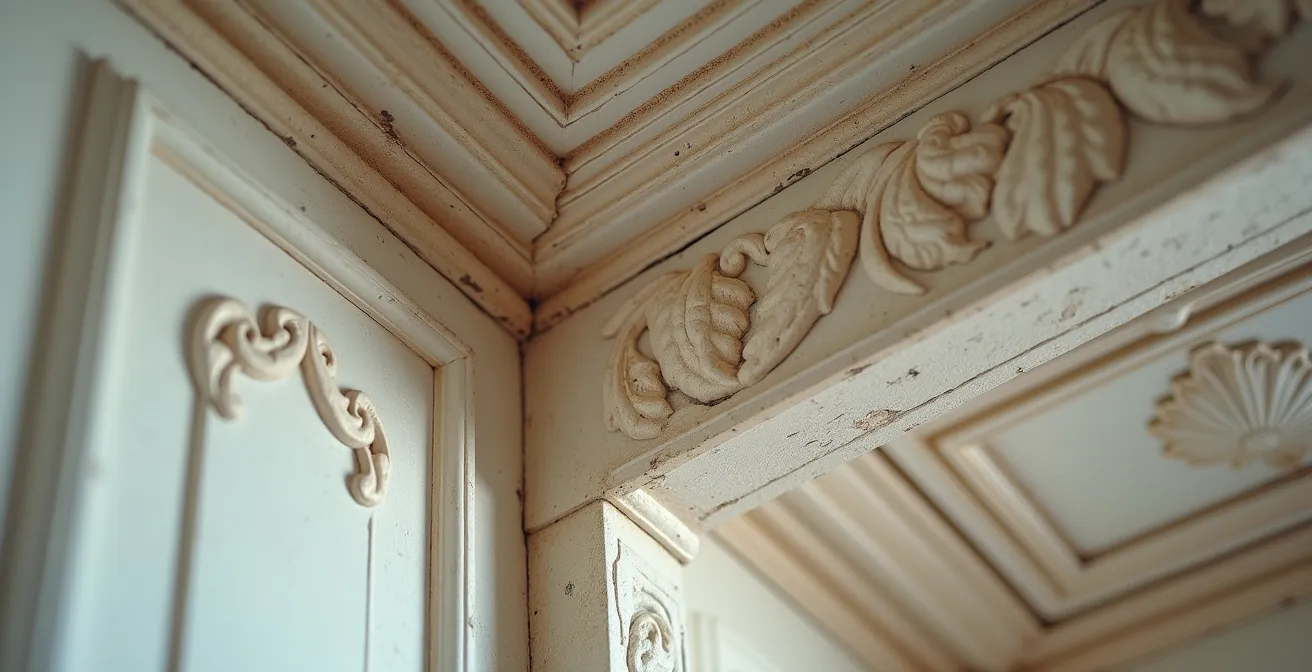
This granular approach is essential because the cost disparity can be immense. As an in-depth analysis of appraisal methods reveals, homes with unique features often have rebuilding costs even higher than brand new constructions. The pool of skilled tradespeople capable of replicating 19th-century plaster techniques or custom millwork is small and commands premium rates, especially in a post-disaster scenario where demand surges. Without a specific rider or endorsement on your policy that explicitly acknowledges and values these features, an insurer will default to a “builder-grade” replacement, leaving you to fund the immense difference out of pocket.
Wood or Brick: How Construction Materials Impact Your Premium and Payout?
The primary construction materials of your dwelling are a major variable in the reconstruction cost equation, influencing not just the final payout but also your ongoing insurance premiums. The choice between materials like a traditional wood frame, brick masonry, or modern insulated concrete forms (ICFs) creates a complex matrix of risk and cost that a cost estimator must analyze. It goes far beyond the simple cost of the materials themselves.
For an insurer, the key factor is risk, particularly fire risk. A brick or masonry home is classified as more fire-resistant than a wood-frame home. This lower risk profile often translates into a 5-10% discount on your annual premium. Conversely, while a wood-frame structure may have a higher fire risk, it is generally faster and less expensive to build due to the wider availability of contractors and materials. This introduces the concept of Reconstruction Cost Dynamics, where timeline and labor availability heavily influence the final cost.
The following table provides a simplified comparison, but the reality is more nuanced, especially when considering labor. The availability of skilled masons, for instance, can be a significant bottleneck in many regions, driving up the cost and timeline for rebuilding a brick home. A detailed analysis of reconstruction costs shows that local labor availability can alter costs significantly, sometimes adding substantially more per square foot in areas with shortages.
| Material Type | Fire Risk | Premium Impact | Rebuild Cost | Timeline Impact |
|---|---|---|---|---|
| Brick | Lower (fire-resistant) | 5-10% lower | Higher ($200-300/sq ft) | Longer (skilled mason shortage) |
| Wood Frame | Higher (combustible) | Standard rates | Moderate ($150-200/sq ft) | Faster (more contractors) |
| ICF/SIPs | Very Low | 10-15% discount possible | Higher initially | Variable (specialized crews) |
Therefore, a precise calculation must assess not only the base material cost but also the local labor market conditions and potential premium savings over time. This strategic analysis is central to an accurate dwelling coverage calculation.
The Unpermitted Addition That Could Void Your Dwelling Coverage
One of the most significant hidden liabilities for a homeowner is unpermitted construction. A finished basement, a deck, or a small addition completed without the required municipal permits may add lifestyle value, but from an insurance perspective, it represents a major, uninsurable risk. In the event of a claim, an insurer will typically only cover the property as it is legally documented in municipal records. If a fire originates in the faulty wiring of an unpermitted addition, an insurer could argue that this material change in risk gives them grounds to deny the entire claim, not just the portion related to the addition.
This is a critical point of vulnerability assessment. The unpermitted square footage officially does not exist. You cannot insure it, and its presence can jeopardize the coverage on the rest of your legally constructed home. The only way to mitigate this risk is to bring the work into compliance. This process, while potentially costly and time-consuming, is essential for securing your investment. It involves retroactively documenting the work and having it inspected to ensure it meets current building codes.
Ignoring unpermitted work is not a viable strategy. It creates a ticking time bomb in your insurance policy. Legitimizing the structure is the only way to ensure it is properly included in your dwelling coverage calculation and that it doesn’t serve as a reason for a claim denial. The process requires a systematic approach to rectify the oversight.
Action Plan: Legitimizing Unpermitted Work
- Search municipal records to confirm which permits exist for your property.
- Hire an architect or draftsperson to create ‘as-built’ drawings of the unpermitted structure.
- Schedule a formal inspection with your local building department to review the work.
- Execute any required modifications or upgrades to bring the structure up to current building codes.
- Obtain the official retroactive permit approval and have it recorded by the municipality.
When to Inspect Your Foundation: The Cracks That Insurance Won’t Fix
The foundation is the most critical structural component of your home, yet its health is a major blind spot in many insurance policies. Standard homeowners insurance is designed to cover sudden and accidental damage. It explicitly excludes damage that occurs over time due to gradual settling, soil pressure, or poor maintenance. This means that most foundation cracks—the very issues that can compromise the entire structure—are not covered. Ignoring them is not an option, as their existence could be used by an insurer to deny a related claim for a covered peril, arguing pre-existing damage.
A proactive vulnerability assessment requires you to act as the first line of defense. Regularly inspecting your foundation for signs of stress is not just good maintenance; it’s a critical risk management practice. Not all cracks are cause for alarm, but knowing how to differentiate between minor settlement and signs of serious structural distress is key. Vertical hairline cracks are often harmless, while horizontal cracks are almost always a red flag indicating significant external pressure on the wall.
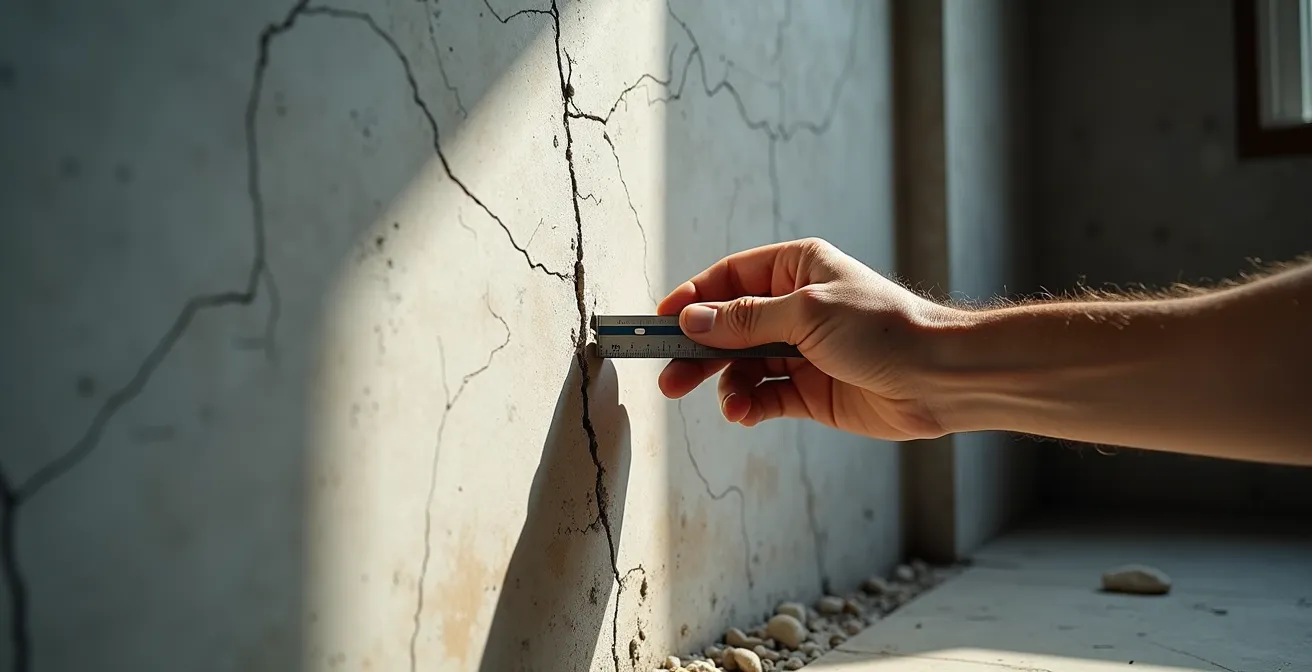
A simple triage system can help you monitor your foundation’s health. You should document all visible cracks with dated photographs, using a ruler for scale to track any progression. Any horizontal crack, stair-step pattern in brickwork, or crack wider than a quarter of an inch warrants an immediate call to a licensed structural engineer. Their professional assessment is the only way to determine the severity of the issue and the necessary remediation. This documentation is invaluable, proving you have been a diligent homeowner and helping to isolate any new damage in a future claim.
How Does “New for Old” Coverage Actually Work in a Claim?
“Replacement Cost Value” (RCV) coverage, often marketed as “new for old,” is the gold standard for homeowners insurance. It promises to pay the full cost to rebuild your home with materials of like kind and quality, without deducting for depreciation. However, the mechanics of how this money is paid out during a claim is a critical detail that often surprises homeowners and can create significant financial strain. The payment is typically not a single lump sum.
In practice, insurers almost always use a two-check process. The first check is for the Actual Cash Value (ACV) of the damage. ACV is calculated as the replacement cost minus depreciation. For example, if a 15-year-old roof costs $30,000 to replace and its depreciation is calculated at $15,000, your first check will only be for $15,000. This initial payment is often insufficient to even begin the work.
Case Study: The Two-Check Process Reality
When a homeowner files a claim under replacement cost coverage, insurers typically issue payment in two phases. First, they pay the Actual Cash Value (ACV), which is the replacement cost minus depreciation. For example, if replacing a 10-year-old roof costs $20,000 but depreciation is $8,000, the first check is only $12,000. The homeowner must then complete repairs and submit receipts to receive the second check for the $8,000 depreciation amount. This creates a significant cash flow challenge, as homeowners must essentially finance the depreciation portion during reconstruction.
You, the homeowner, are then required to finance the depreciation gap ($15,000 in our roof example), complete the repairs, and submit detailed receipts and proof of completion to the insurer. Only then will they release the second check containing the recoverable depreciation. This system creates a serious cash-flow problem at the worst possible time. Being underinsured exacerbates this issue, as it not only reduces the total limit but also means the initial ACV payment is even smaller, making it harder to start rebuilding. This financial friction is a key reason why a study found that underinsured homeowners are significantly less likely to even apply for rebuilding permits within a year of a disaster.
Key Takeaways
- Your home’s insurance value must be based on a forensic rebuild calculation, not market or tax values.
- Specialty features, material choices, and labor costs are primary drivers of reconstruction cost, not just square footage.
- Hidden risks like unpermitted work and foundation issues can void coverage and must be proactively managed.
Standard vs Upgrade: Which Finishes Should You Sacrifice to Stay on Budget?
When calculating your total replacement cost, finishes represent a significant and highly variable portion of the budget. For a custom home, the difference between “builder-grade” and “high-end” finishes can amount to hundreds of thousands of dollars. While you may want to insure every single upgrade, it’s a strategic exercise in balancing cost, value, and risk. Some upgrades provide a tangible return on investment through premium discounts, while others are purely aesthetic.
A cost estimator’s approach involves creating a decision matrix. You must weigh the initial cost of insuring an upgrade against its impact on your premium and its long-term resilience. For instance, investing in impact-resistant windows in a hurricane-prone area is a high-priority upgrade. While expensive, it can generate significant premium discounts (10-20%) and dramatically reduce the risk of catastrophic failure during a storm. This is an investment that pays for itself.
In contrast, items like high-end granite countertops or custom imported tile have a minimal impact on your premium but add significantly to the rebuild cost. These are “medium priority” items where you might consider insuring them at a slightly lower grade to keep the total coverage limit and your premium manageable. The key is to make conscious, informed trade-offs rather than simply insuring everything to the highest possible standard, which can make the policy prohibitively expensive.
This decision matrix helps you allocate your insurance dollars where they will have the most impact on resilience and financial stability, a key principle of risk engineering.
| Finish Type | Initial Cost Impact | Insurance Premium Impact | Resilience/Durability Score | Strategic Priority |
|---|---|---|---|---|
| Impact-Resistant Windows | +$15-25K | -10-20% discount | 9/10 | High (pays for itself) |
| Granite Countertops | +$3-5K | Minimal | 7/10 | Medium (aesthetic value) |
| Hardwood Floors | +$8-12K | None | 8/10 | Medium (long-term value) |
| Smart Home Security | +$2-3K | -5-10% discount | 6/10 | High (premium savings) |
How to Assess Your Property Vulnerability Like a Risk Engineer?
The final step in calculating your true rebuilding cost is to synthesize all the data points and adopt the holistic mindset of a risk engineer. This goes beyond a simple sum of materials and labor. It involves conducting a comprehensive vulnerability audit of your property to identify all factors that could increase the cost or complexity of a post-disaster rebuild. This audit is the ultimate expression of proactive risk management.
Your audit should begin with external hazards. Check official sources like FEMA flood maps and wildfire risk assessments for your specific location. This establishes your baseline environmental risk. Next, perform a systems inventory, documenting the age and condition of your roof, HVAC, electrical, and plumbing systems. An older, complex system is more expensive to replace than a modern, standard one. The most critical part of this audit is failure chain analysis: mapping how one event could cascade into a larger disaster. For example, how embers from a wildfire could enter an attic vent, igniting the roof structure from within.
This process is not a one-time event. It is a continuous cycle of assessment and adjustment. Construction costs are not static; they are subject to inflation and market pressures. For example, recent data shows that total residential reconstruction costs in the U.S. rose by 5.2% in a single year. This means your dwelling coverage limit must be reviewed and adjusted annually to keep pace. An accurate replacement cost is a moving target, and hitting it requires constant vigilance and a commitment to seeing your home not just as an asset, but as a complex system of interconnected risks and values.
To ensure your custom home is protected, you must move beyond generic advice and perform this detailed, technical assessment. Calculating your true dwelling coverage is the most critical step you can take to secure your financial future against a catastrophic loss.