The success of your water damage claim hinges not on the extent of the damage, but on the forensic quality of the evidence you present *before* the adjuster arrives.
- Your policy covers “sudden and accidental” events; vague or slow leak language is an automatic denial.
- Immediate, documented mitigation is a non-negotiable policy duty that protects your claim.
Recommendation: Treat every step, from the moment of discovery, as building an undeniable case file to preempt common insurer objections.
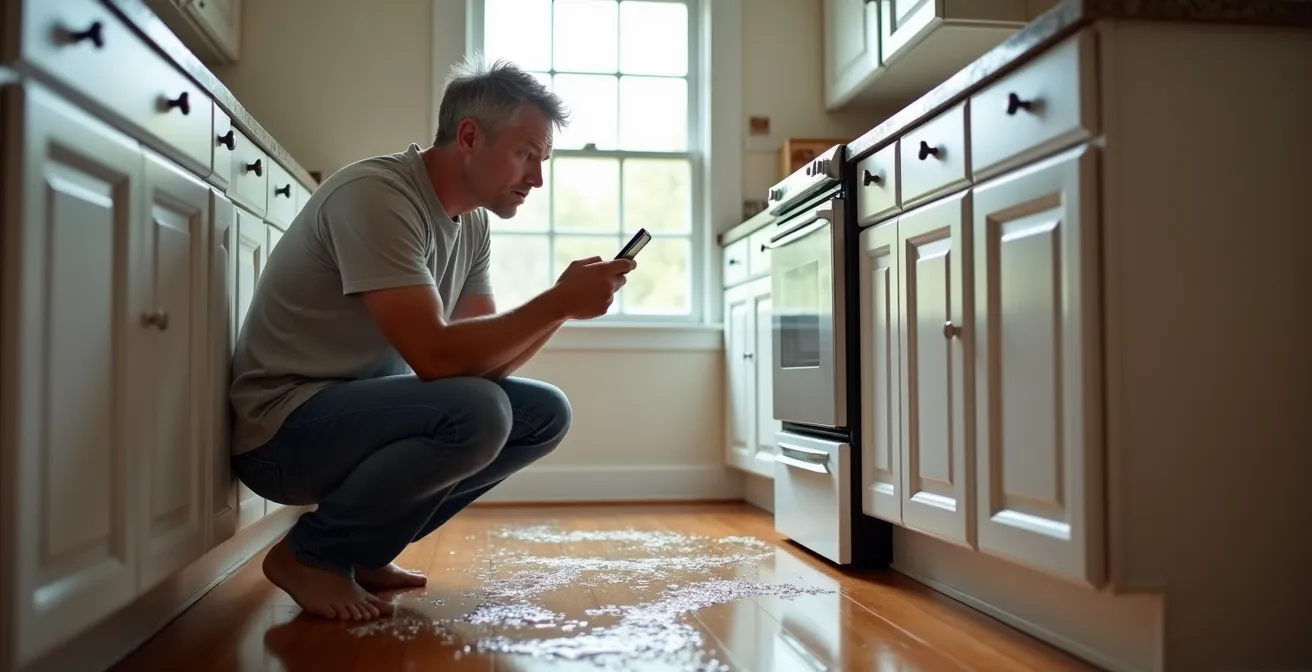
The sound is unmistakable: a sudden spray, a bang, or the dreaded gush of water where it shouldn’t be. Your kitchen is flooding from a failed flex hose, and panic sets in. The immediate thoughts are about stopping the water and saving your property. But in the back of your mind, another worry surfaces: the insurance claim. Most homeowners believe that calling their insurer and taking a few photos is enough. They assume the damage speaks for itself.
This assumption is the first and most costly mistake. Insurers scrutinize water damage claims more than almost any other type, looking for reasons to deny or limit coverage. They are not investigating to help you; they are investigating to protect their financial interests, often by proving the damage was gradual, a result of poor maintenance, or that you failed to mitigate it properly. To succeed, you cannot approach this as a victim asking for help. You must become the lead investigator of your own claim.
This guide departs from the generic advice. We will not just tell you to “take pictures”; we will show you how to create forensic documentation. We will not just say “stop the leak”; we will explain how to frame this action as fulfilling your contractual duty to the insurer. By adopting the mindset of a plumbing failure investigator, you will build a case file so robust and well-argued that it preempts the most common denial tactics, turning a potential dispute into a straightforward, approved claim.
This article provides a forensic roadmap to navigate your claim. We will dissect the language insurers use, detail precise documentation methods, and reveal the critical actions that secure your rights from the moment a pipe bursts.
Summary: A Forensic Roadmap to Navigating Your Water Damage Claim
- Why the Definition of “Sudden” Matters More Than the Damage Amount?
- How to Photograph a Burst Pipe Before the Plumber Fixes It?
- Tear-Out vs Pipe Repair: Which Cost Does the Insurance Actually Cover?
- The Heating Mistake That Voids Coverage for Frozen Bursts
- When to Replace Polybutylene Pipes: The Ticking Time Bomb?
- How to Mitigate Water Damage Immediately to Preserve Your Claim Rights?
- Why You Must Stop the Leak Even Before the Adjuster Arrives?
- Why Water Damage Is the Most Contested Insurance Claim?
Why the Definition of “Sudden” Matters More Than the Damage Amount?
In the world of insurance, “sudden and accidental” are the two most important words for your water damage claim. An adjuster’s primary job is to determine if the event meets this definition. If it doesn’t, the claim is often dead on arrival, regardless of whether you have a few hundred dollars of damage or a completely flooded basement. The financial scale of the damage is secondary to the nature of the event. A catastrophic failure that dumps 50 gallons of water in minutes is covered; a slow drip that does the same over six months is not.
This is why the language you use in your initial report is critical. You are not just telling a story; you are building a causation narrative that must align with your policy’s terms. Using words like “slow drip,” “ongoing issue,” or “I noticed a small stain a while ago” gives the insurer a clear path to denial based on gradual damage, which is considered a maintenance issue. Instead, your vocabulary must be precise: “At 8:05 PM, I heard a loud bang from the kitchen and discovered water gushing from the supply line.” This establishes a specific time and a catastrophic event. It is not an exaggeration; it is factual, forensic language. Remember, you are not alone; about 1 in 60 insured homes make a claim for water or freezing damage annually, and the initial report sets the stage for every one of them.
The burden of proof is on you to establish the “sudden and accidental” nature of the failure. This means documenting the exact moment of discovery and framing the event as a catastrophic failure, not the culmination of a long-term problem. Your entire claim rests on this fundamental definition.
This careful framing from the very first call is the cornerstone of a successful claim, creating an official record that is difficult for an insurer to dispute later.
How to Photograph a Burst Pipe Before the Plumber Fixes It?
When a pipe bursts, the plumber’s instinct is to fix it immediately. Your instinct, as the claim investigator, must be to document it first. Telling an adjuster “the plumber fixed it and threw the part away” is a critical error. The damaged component is your primary piece of evidence. Before any repairs begin, you must conduct forensic documentation using a simple but powerful “three-shot technique” to create a complete visual record of the scene.
This technique ensures you capture context, damage, and cause. Start with wide-angle shots of the entire affected room or rooms, showing the full scope of the water’s path and the items it has damaged. Next, move to medium shots, focusing on specific areas of significant damage, like warped flooring, saturated drywall, or ruined furniture. Finally, and most importantly, take detailed close-up shots of the failed pipe or fitting itself. Capture it from multiple angles, showing the break, crack, or point of failure. This visual evidence proves the catastrophic nature of the burst.
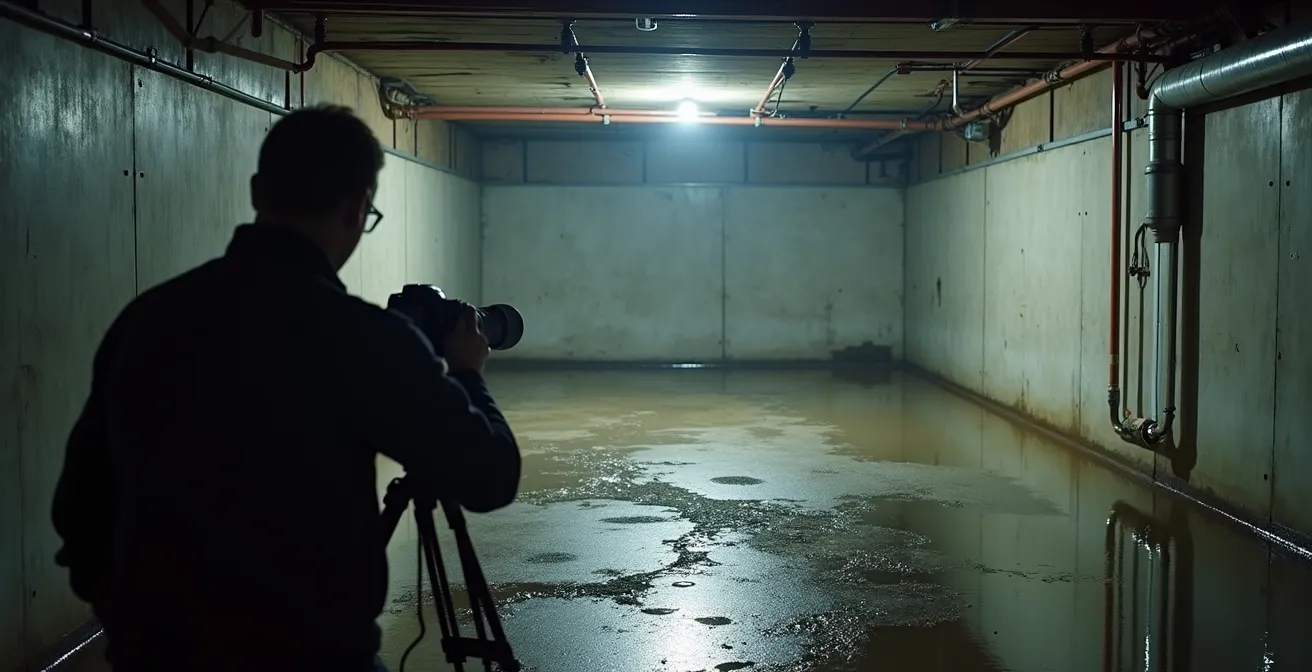
As the visual record above suggests, professional documentation involves capturing the scene from multiple perspectives. This isn’t just about taking random pictures; it’s about telling a clear, chronological story. Accompany your photos with a written log detailing the time of discovery and the sequence of events. Once documented, instruct your plumber to save the failed part. Bag it, label it with the date, and store it. This physical evidence, combined with your photographic record, makes it nearly impossible for an adjuster to argue that the damage was from an unidentifiable or gradual source.
By treating the scene like a forensic investigation before it’s disturbed, you provide the irrefutable proof needed to validate your claim.
Tear-Out vs Pipe Repair: Which Cost Does the Insurance Actually Cover?
One of the most confusing aspects of a pipe burst claim is understanding what is and is not covered. A common and frustrating discovery for homeowners is that the cost of the failed pipe itself is almost never covered. Insurance policies view plumbing components as part of home maintenance, and their failure is your responsibility. However, the true financial burden of a burst pipe is not the component itself but the collateral damage and the cost to access it.
This is where the crucial distinction between access and repair comes into play. While the insurer won’t pay for a $20 supply line, they will typically cover the thousands of dollars required to get to it. This includes the cost of a “tear-out”—the demolition of drywall, cutting through cabinets, or even breaking up a concrete slab to access the leaking pipe. These “access costs” are covered because they are a necessary part of stopping the covered peril: the sudden and accidental discharge of water. All the subsequent water damage to your floors, walls, and personal property is also covered under this principle.
The following table breaks down this distinction, which is essential for understanding your contractor’s estimate and the adjuster’s assessment. It highlights what insurers typically categorize as a covered access cost versus an uncovered maintenance repair, based on common industry practices.
| Type of Cost | Usually Covered? | Why |
|---|---|---|
| Pipe itself | No | Considered maintenance issue |
| Tear-out (access to pipe) | Yes | Necessary to stop water damage |
| Water damage to property | Yes | Sudden & accidental damage |
| Drywall/flooring removal | Yes | Part of access costs |
| Matching materials replacement | Sometimes | If exact match unavailable |
This distinction is consistently upheld by industry professionals. As experts from a plumbing service clarify when advising on claims:
Tear-out (access to the pipe) – Often covered if drywall, flooring, or even concrete has to be removed to stop the water leak. Water damage – Damage to floors, drywall, or personal property caused by the escaping water is typically covered.
– Aaron Plumbing Services, Burst Pipe Insurance Claim Tips Guide
Focus your claim narrative on the water damage and access costs, not on the failed part, to align perfectly with what your policy is designed to cover.
The Heating Mistake That Voids Coverage for Frozen Bursts
When winter temperatures plunge, the risk of frozen pipes skyrockets. A burst caused by freezing is generally considered a “sudden and accidental” event, but there is a major exception that every homeowner must know: the “maintenance of heat” clause. Virtually all homeowner’s insurance policies contain a provision requiring you to take reasonable care to maintain heat in your home during cold weather. Failure to do so can, and often does, result in a claim denial.
This clause is most often invoked when a pipe bursts in a home that is unoccupied, whether because the owners are on vacation or it’s a seasonal property. If an insurer can prove the heat was turned off or set too low to prevent freezing, they will argue you neglected your duty to protect the property. This transforms a covered peril into an act of homeowner negligence. Setting your thermostat to 55°F (13°C) or higher is the generally accepted standard for “reasonable care.”
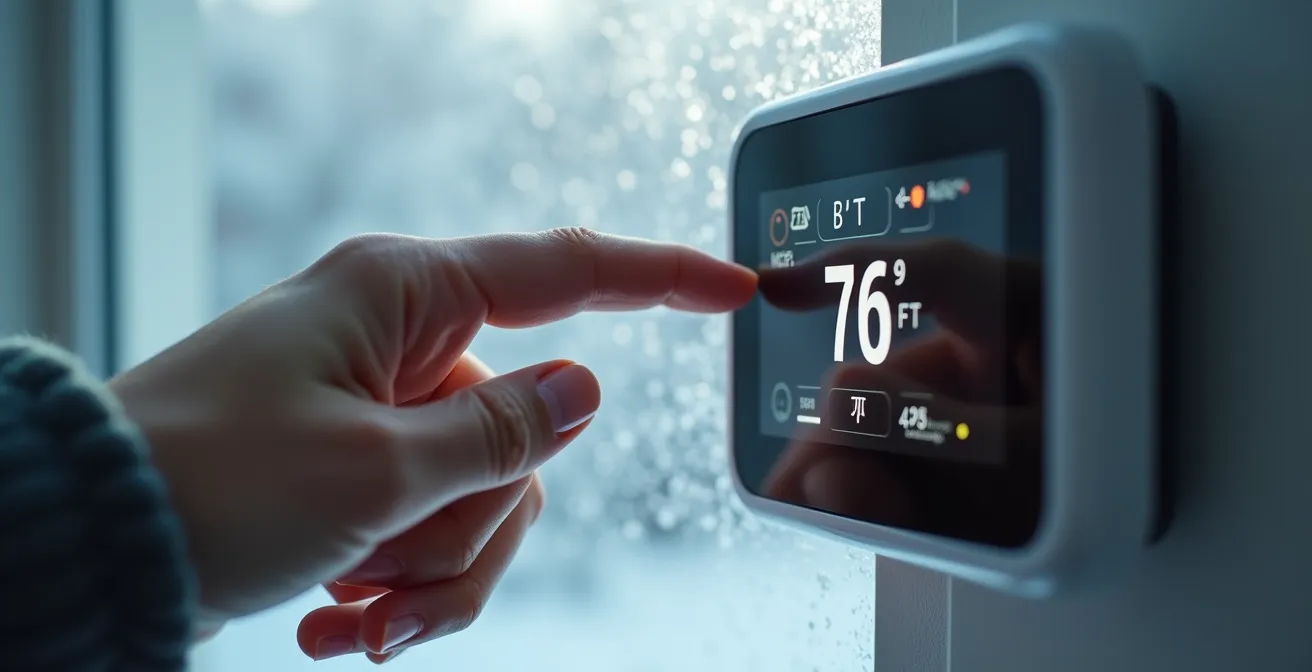
Your thermostat setting is a critical piece of evidence. If you are away during a cold snap and a pipe bursts, be prepared to prove your diligence. This might involve providing heating oil or gas bills that show continuous usage, or even having a remote thermostat service that logs temperature data. If a housesitter was present, their testimony is valuable. The goal is to create a record demonstrating that you took proactive steps to maintain heat, thereby fulfilling your policy obligations and protecting your claim from this common denial tactic.
Proving you maintained heat is a powerful piece of denial preemption, closing a loophole that insurers frequently use to avoid paying for freeze-related damages.
When to Replace Polybutylene Pipes: The Ticking Time Bomb?
If your home was built between the late 1970s and mid-1990s, you may be living with a hidden threat: polybutylene (PB) plumbing. This gray plastic piping was a popular, low-cost alternative to copper, but it was discovered to have a critical flaw. The plastic reacts to common oxidants in public water supplies, becoming brittle from the inside out. Over time, these pipes are prone to sudden, catastrophic failure without any external warning signs.
The insurance industry is acutely aware of this risk. Many carriers refuse to write new policies for homes with PB plumbing or will charge significantly higher premiums. In some regions, the stance is even more severe; for example, Florida’s Citizens Property Insurance Corporation will not insure any property with polybutylene plumbing at all. If you have these pipes and a leak occurs, you are in a precarious position. The insurer may argue the material is inherently defective and its failure is not “accidental” but inevitable, attempting to deny the claim on grounds of a known, unaddressed fault.
However, an effective negotiation strategy exists. For a homeowner who was unaware of the PB pipes (e.g., it was not disclosed during the home purchase), you can frame the incident as a “first-time failure.” By emphasizing the sudden and unexpected nature of the burst, especially if it’s the plastic fittings that fail, you can argue it as a classic “sudden and accidental” event from your perspective. This approach can shift a likely denial into a negotiable claim, especially if you had no prior knowledge of the ticking time bomb in your walls. The best long-term solution, however, is full replacement to eliminate the risk entirely.
Ultimately, while a strategic claim argument can work once, the only permanent way to secure your home and your insurability is to replace all polybutylene pipes.
How to Mitigate Water Damage Immediately to Preserve Your Claim Rights?
Your insurance policy is a two-way contract. While your insurer has a duty to pay for covered losses, you have a duty to mitigate further damage. This means you are contractually obligated to take reasonable steps to stop the leak and prevent the situation from getting worse. Failing to do so can jeopardize your entire claim. Immediate mitigation is not just about saving your property; it’s about preserving your claim rights.
The moment you discover a leak, your first call should not be to your insurer, but to your home’s main water shutoff valve. Stop the flow of water immediately. Once the source is controlled, your mitigation efforts begin. This involves removing standing water, moving undamaged items to a dry location, and starting the drying process with fans and dehumidifiers. This is not the time for permanent repairs like rebuilding walls or replacing floors—those must wait for the adjuster’s inspection. The focus is on stabilization.
It’s highly recommended to call a professional water mitigation company. Their involvement serves two purposes: they have the industrial-grade equipment to dry your home effectively and prevent mold growth, and they provide third-party documentation of the damage and the steps taken to mitigate it. This professional report becomes a powerful piece of evidence in your claim file, proving you acted responsibly. Keep a detailed log of every action you take, every call you make, and every expense you incur during this process.
Action Plan: Immediate Mitigation Checklist
- Shut off the main water supply and document its location with a photo.
- Remove standing water with mops, buckets, or a wet-dry vacuum within the first 24-48 hours.
- Contact a professional water mitigation company to document the initial damage and begin professional drying.
- Photograph all damaged materials and personal property *before* disposing of anything.
- Do not begin any permanent repairs or reconstruction until after the adjuster has inspected the property.
By demonstrating proactive and responsible mitigation, you show the insurer you are a partner in minimizing the loss, which is a key element in a smoothly processed claim.
Why You Must Stop the Leak Even Before the Adjuster Arrives?
Some homeowners hesitate to take action before the insurance adjuster arrives, fearing it might void their claim. This is a dangerous misconception. In reality, the opposite is true. Your policy requires you to stop the leak and protect your property from further harm. Delaying action is one of the fastest ways to have a portion of your claim denied, thanks to a common insurer tactic known as the “compound damage” argument.
This strategy involves the insurer arguing that they are only responsible for the initial damage that occurred at the moment of the burst. Any subsequent damage that happened because you failed to stop the leak in a reasonable time is considered your fault and, therefore, not covered. For example, if a pipe bursts and floods your kitchen floor, that is covered. If you fail to stop the leak and the water then seeps into the basement for the next 12 hours, the insurer may refuse to pay for the basement damage, blaming your inaction. The financial impact of such a delay is staggering; just 1 inch of water in a typical home can cause up to $25,000 in damages, according to FEMA.
By shutting off the water main immediately, you close this loophole. This single action demonstrates good faith and proves you have fulfilled your policy obligation to mitigate the loss. It draws a clear line in the sand, defining the full extent of the “sudden and accidental” event for which the insurer is responsible. Your job is to contain the incident so the adjuster can assess a finite amount of damage, not an expanding catastrophe. Document the time you shut off the water; this timestamp is a key piece of your forensic file.
Waiting for permission is not an option; immediate, decisive action is your most powerful tool in defining the boundaries of your claim.
Key Takeaways
- Your claim’s success depends on the “sudden and accidental” narrative; your word choice is your most powerful tool.
- Forensic documentation (wide, medium, close-up shots) before any repairs is non-negotiable evidence.
- Immediate mitigation is not just damage control; it is a contractual duty that preempts the “compound damage” denial tactic.
Why Water Damage Is the Most Contested Insurance Claim?
Water damage claims are a major pain point for both homeowners and insurers, but for very different reasons. For a homeowner, it’s a disruptive and emotional event. For an insurer, it’s a significant financial liability. This fundamental conflict of interest is why these claims are so frequently contested. The financial stakes are high; from 2018 to 2022, the average insurance payout for water damage and freezing claims was nearly $14,000, making it one of the most expensive common claim types.
The core of the dispute almost always boils down to one question: was the damage truly “sudden and accidental,” or was it the result of a long-term, unaddressed maintenance issue? Water has a unique ability to hide its tracks. A slow, persistent leak can exist behind a wall for months, silently causing rot and mold, before it finally manifests in a visible way. When an adjuster investigates, they are looking for evidence of this gradual damage: long-standing water stains, decay, or mold. These findings are an adjuster’s proof that the loss is not covered.
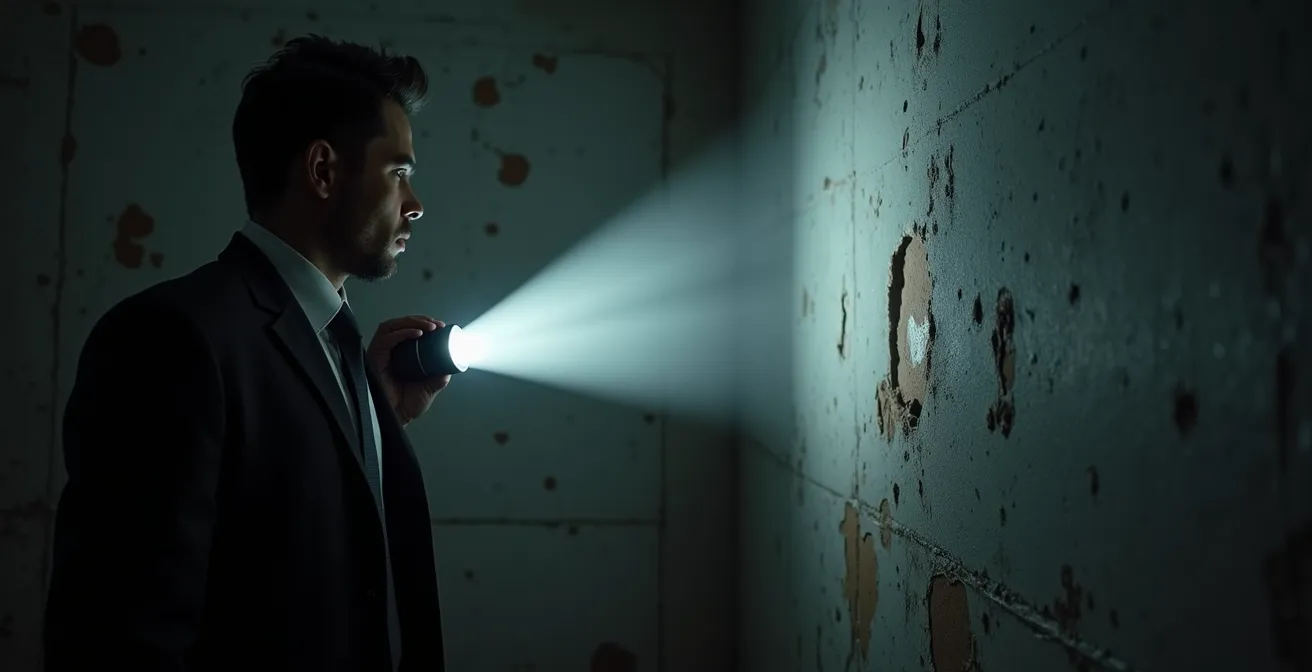
This is the investigative mindset you are up against. An adjuster is trained to find clues that point away from a sudden event. Your forensic file—with its precise timeline, photographic evidence of a catastrophic failure point, and proof of immediate mitigation—is your counter-narrative. It systematically dismantles the “gradual damage” argument before it can even be fully formed. By providing a clear, evidence-based account of a sudden event, you leave the adjuster with little room to interpret the facts any other way.
Now that you understand the insurer’s perspective, use this forensic approach to compile your claim file. By building an undeniable case from the outset, you shift the dynamic from a potential dispute to a straightforward request for the coverage you are rightfully owed.