
Your “comprehensive” policy is not a safety net; it’s a legal document engineered with specific exclusions that create significant financial risk.
- Most policies deliberately separate damage from “sudden” events (covered) and “gradual” issues like mold or wear-and-tear (excluded).
- Rebuilding after a disaster often requires expensive code upgrades that your standard dwelling coverage will not pay for, creating a massive deficit.
Recommendation: Stop assuming you’re covered. Use this audit to identify your specific gaps and demand endorsements or policy changes from your agent in writing.
You pay your homeowners insurance premium on time, every year. You bought a “comprehensive” or “all-risk” policy and haven’t had a major claim in years. You feel secure, confident that your largest asset is protected. This confidence is the single greatest risk you face. As a policy auditor, my role is to uncover the dangerous realities hidden in the fine print, and the truth is that most standard policies are riddled with holes—financial time bombs waiting for the right trigger.
The common advice to “read your policy” is useless without knowing what to look for. You are not looking for what is covered; you are hunting for what is excluded. These silent exclusions are not accidents; they are carefully crafted clauses that define the boundaries of the insurer’s responsibility. They often hinge on a single word—the difference between “sudden” and “gradual” water damage, for instance—that can determine whether you receive a check for $100,000 or a denial letter.
But the true danger lies beyond the obvious gaps like floods or earthquakes. The most financially devastating shortfalls come from contractual ambiguities and modern realities your 3-year-old policy was never designed to handle, such as soaring construction costs, updated municipal building codes, and the liability of a home-based business. This is not about simply reviewing your coverage; it’s about conducting a meticulous audit to defuse these risks.
This guide will walk you through that audit. We will dissect the most common and costly gaps, from water damage and mold to rebuilding deficits and vacancy clauses. The goal is to arm you with the specific knowledge needed to transform your policy from a document of assumptions into a fortress of genuine protection.
Summary: How to Find and Fix the Coverage Gaps in Your Current Policy?
- Is Your “Comprehensive Coverage” Actually Full of Holes?
- Why Your Basic Plan Won’t Pay for Water Backup Damage?
- The 3 Exclusions That Even Comprehensive Plans Refuse to Cover
- Why Mold Removal Is Often Excluded Despite Water Coverage?
- Endorsement or Separate Policy: Which Closes the Sewer Backup Gap?
- How to Close the Gap Between Rebuilding Costs and New Building Codes?
- The 30-Day Rule That Voids Coverage for Empty Homes
- When to Add an Inflation Guard: The Annual Review Necessity?
Is Your “Comprehensive Coverage” Actually Full of Holes?
The term “comprehensive coverage” is a marketing illusion. In the insurance world, there are two primary policy types: Named Perils (HO-3), which only covers events specifically listed, and Open Perils (HO-5), which covers everything *except* for what is specifically excluded. While an HO-5 policy offers broader protection, its value is entirely dependent on its list of exclusions. Your audit begins by treating this list not as fine print, but as the most important part of your contract.
Most policyholders are unaware of the strict sub-limits lurking within their plan. For example, while your policy might have a $500,000 dwelling limit, it likely contains a separate, much lower cap for specific items. It is critical to ask your agent, “What are the specific sub-limits for mold, electronics, and water backup?” You will often find mold coverage is capped at a mere $1,000-$10,000, while the cost of electronics is limited to $2,500—far below the cost of replacing your home office setup.
Another critical question is whether your policy uses Replacement Cost Value (RCV) or Actual Cash Value (ACV), especially for the roof. RCV pays the full cost to replace the item, while ACV subtracts depreciation for age and wear. An ACV clause on a 15-year-old roof could leave you thousands of dollars short of what you need for a new one. As one insurance expert from the AARP advises, if you have a specific concern, you must get confirmation of coverage in writing.
If there’s a risk you’re especially worried about, ask your agent to put it in writing that you’re insured. Then you have legal proof if something goes wrong and the insurer refuses to cover you.
– Insurance Expert, AARP Insurance Guide
This principle of written proof is the foundation of a successful policy audit. Do not accept verbal assurances. If it’s not in the contract or an official endorsement, it doesn’t exist.
Why Your Basic Plan Won’t Pay for Water Backup Damage?
Water damage is one of the most common homeowners claims, yet it is also one of the most misunderstood areas of coverage. A standard policy creates a crucial distinction between three types of water damage, and confusing them can lead to a swift claim denial. Your policy is designed to cover damage from “water from above” but explicitly excludes damage from “water from below.”
This distinction is not intuitive. Water damage from a burst pipe inside your wall or a leak in your roof is generally covered because it’s considered a sudden and accidental internal failure. However, if water backs up from a sewer or drain, or if groundwater seeps into your basement during a heavy rainstorm, it is almost universally excluded from a basic policy. The insurer views this as an external problem related to municipal infrastructure or ground saturation, not a failure of your home’s structure.
This creates a significant gap, as the damage from a sewer backup can be extensive, unsanitary, and costly to repair. The disconnect between homeowners’ preparedness for water events and their actual coverage is stark. Many assume any water damage is covered, a dangerous assumption that leaves them exposed. The only way to close this gap is with a specific endorsement.
The following table breaks down how insurers categorize water damage, clarifying what is and isn’t covered under a standard HO-3 policy.
| Water Damage Type | Source | Standard Coverage | Required Addition |
|---|---|---|---|
| Water from Above | Pipe burst, roof leak | Often Covered | None needed |
| Ground Water/Flood | External water seeping in | Never Covered | Separate flood policy |
| Water Backup | Sewer/drain backup | Never Covered | Backup endorsement |
Without a specific water backup endorsement, you are entirely on your own for cleanup and repairs, which can easily run into tens of thousands of dollars.
The 3 Exclusions That Even Comprehensive Plans Refuse to Cover
Even the most robust “open peril” policies are built around a core set of exclusions that insurers will not cover under any standard circumstance. These are risks deemed too widespread, too predictable, or related to commercial activity. Ignoring them is a recipe for financial disaster. As an auditor, I flag these three as non-negotiable items for review.
The first and most well-known are catastrophic ground and water events. This category includes earthquakes, sinkholes, and floods. A standard policy does not cover damage from rising water, whether from a river overflowing its banks or flash flooding after a storm. These events require separate, dedicated policies, such as one from the National Flood Insurance Program (NFIP) or a specialized earthquake insurer.
The second silent exclusion is damage from neglect or wear and tear. Insurance is designed to cover sudden and accidental events, not the slow decay of your property. Problems like a roof that fails after 25 years of service, foundation cracks from settling, or damage from pests like termites or rodents are considered maintenance issues. Insurers expect you to maintain your property, and claims arising from a failure to do so will be denied.
The third is a modern gap affecting millions: home-based business activities. Standard homeowners policies are for personal liability and property, not commercial operations. If you run a business from home, your coverage is likely dangerously inadequate. A 2024 analysis highlights a major coverage gap for remote workers, noting that while 27% of Americans work from home, standard policies cap business equipment at $2,500. Furthermore, your personal liability coverage will not protect you if a client is injured on your property. This requires a business endorsement or a separate commercial policy.
Why Mold Removal Is Often Excluded Despite Water Coverage?
Here lies one of the most contentious areas of insurance: you have coverage for water damage, but not for the mold that grows as a direct result. This seeming contradiction is rooted in the “gradual vs. sudden” principle. If a pipe bursts and you address the water immediately, any resulting mold may be covered up to a certain limit. However, if mold develops from a slow, undetected leak or general humidity, it is considered a maintenance issue and is explicitly excluded.
Insurers see slow-growing mold as a failure of homeowner upkeep. The financial consequences of this distinction are severe. The cost of professional mold remediation is staggering, and standard policy sub-limits are a drop in the bucket. For example, industry data shows that while average remediation costs run from $15,000 to $30,000, the typical insurance coverage for mold is capped between $1,000 and $10,000.
This creates a massive out-of-pocket expense. A case study from 2025 illustrates this “remediation deficit” perfectly: even for standard cases, mold cleanup can cost up to $9,500, with whole-house disasters exceeding $30,000. Homeowners with a $5,000 mold endorsement still face a significant shortfall. To have any chance of a successful claim, you must prove the water damage was “sudden and accidental” and that you acted promptly to mitigate it. Meticulous documentation is your only defense.
Action Plan: Checklist for Proving Sudden Water Damage
- Immediately photograph all water damage areas, ensuring the images are timestamped.
- Document the specific source of the water damage, such as a burst pipe or appliance failure.
- Contact your insurance company without delay to demonstrate prompt action and mitigate further damage.
- Keep all receipts and contracts from professional mold remediation services as proof of expenses.
- Create a comprehensive, itemized list of all personal property and structural areas affected by the water and mold.
Without this level of proof, your insurer has every reason to classify the mold as a gradual event and deny your claim entirely.
Endorsement or Separate Policy: Which Closes the Sewer Backup Gap?
Once you’ve identified a coverage gap, the next step is to close it. For most common exclusions, the solution is a policy “endorsement” (also known as a rider), which is an add-on that modifies your standard contract. However, for high-risk or high-value items, a separate, standalone policy may be the only viable option. Deciding between the two requires a strategic assessment of your risk and the item’s value.
For risks like sewer and water backup, an endorsement is usually sufficient and affordable, typically costing $40 to $80 per year. It’s an essential add-on for any homeowner. However, for catastrophic risks like earthquakes or floods, endorsements are rarely offered. These require separate policies, often through government programs like the NFIP or specialized private insurers, with costs ranging from hundreds to thousands of dollars annually.
The same logic applies to valuable personal property. Your standard policy has low sub-limits for items like jewelry, art, and collectibles. As industry expert Ashleigh C. Trent notes, insurers see high-value items as ordinary objects without special coverage.
That Babe Ruth signed baseball might be worth $5,000, but insurers will treat it like a regular $5 baseball.
– Ashleigh C. Trent, Tower Street Insurance
For items or collections valued under $10,000, a “scheduled personal property” endorsement may be enough. For high-value collections, a separate policy from a specialty insurer is the only way to secure adequate protection. The following framework outlines when to choose an endorsement versus a separate policy.
| Coverage Type | Best As Endorsement | Best As Separate Policy | Typical Cost |
|---|---|---|---|
| Sewer Backup | Low-risk areas, limited exposure | High-risk zones, older plumbing | $40-$80/year endorsement |
| Earthquake | Rarely offered | Always separate in risk zones | $800-$5,000/year separate |
| Flood | Not available | Required through NFIP | $700-$2,000/year NFIP |
| Valuable Items | Items under $10,000 | Collections over $25,000 | 1-2% of item value/year |
How to Close the Gap Between Rebuilding Costs and New Building Codes?
Perhaps the most insidious financial time bomb in a modern policy is the Ordinance or Law exclusion. After a major fire or natural disaster, you may assume your “dwelling coverage” limit is enough to rebuild your home as it was. This is a critical error. Municipal building codes are updated constantly. A home built in 1990 was constructed under entirely different standards than a home built today, which may require modern electrical systems, fire sprinklers, and structural reinforcements.
Your standard policy is only obligated to pay for rebuilding your home to its *previous* state. It will not pay for the extra costs required to bring it up to current code. This creates a massive “rebuilding deficit.” Worse, if more than 50% of your home is damaged, many municipalities will require you to demolish the remaining, undamaged portion and rebuild the entire structure from scratch to meet modern codes. Your policy will not cover the cost of demolishing that “undamaged” part of your home.
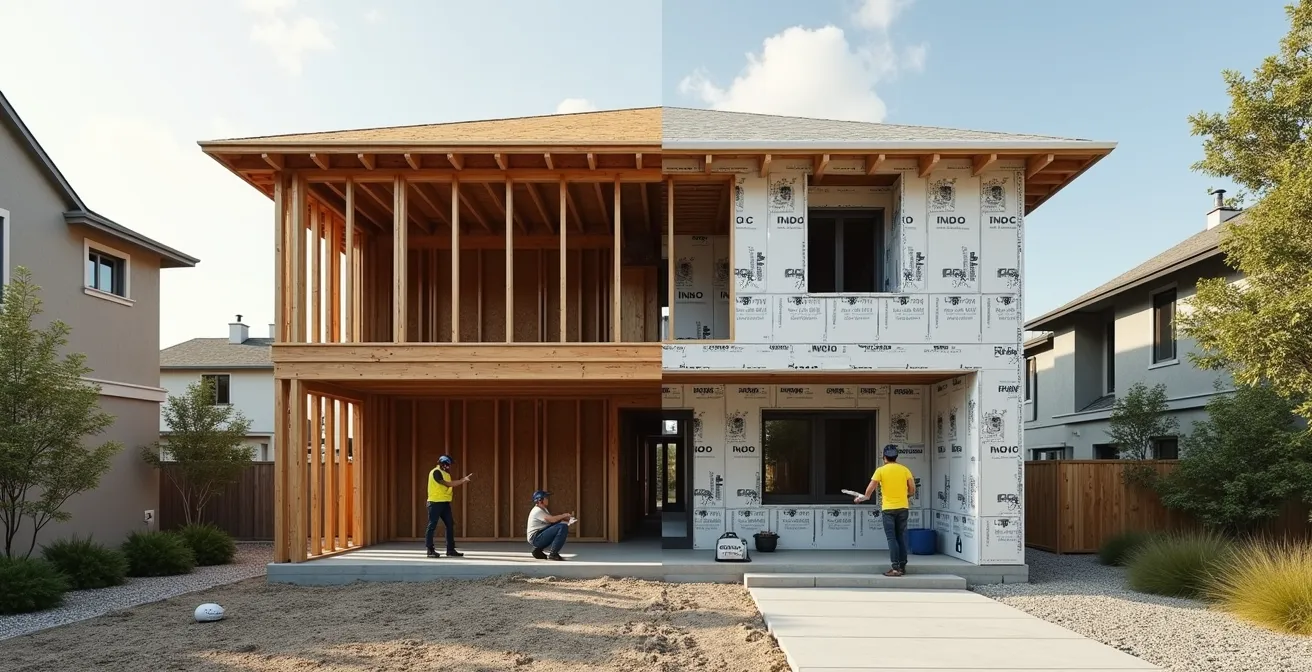
To close this gap, you need a specific Ordinance or Law endorsement. This crucial add-on provides three distinct layers of protection, as outlined by an analysis from Policygenius.
| Coverage Component | What It Covers | Typical Scenario |
|---|---|---|
| Coverage A: Loss to the Undamaged Portion | Cost to rebuild undamaged parts when demolition is required | 55% of home damaged, must demolish remaining 45% |
| Coverage B: Demolition Costs | Expense of demolishing the undamaged portions of the structure | $20,000-$50,000 for complete demolition |
| Coverage C: Increased Cost of Construction | Additional costs to meet new building codes | $35,000+ for sprinkler systems, electrical upgrades |
Without this endorsement, especially for an older home, you could face a shortfall of tens or even hundreds of thousands of dollars, making a full recovery financially impossible.
The 30-Day Rule That Voids Coverage for Empty Homes
Your homeowners policy is designed to cover an occupied residence. If your home is left vacant or unoccupied for an extended period—typically 30 to 60 days—your insurer can and will void your coverage for common perils like vandalism, water damage, and theft. The logic is that an empty home is a much higher risk, and the standard premium does not account for it.
This “residency clause” is a trap for many homeowners. This applies to sellers who have moved out before the sale closes, owners undergoing long renovations, or those who travel for extended periods. The distinction between “unoccupied” (furnishings inside, but no one living there) and “vacant” (empty of possessions) is important, but either can trigger a coverage denial. Proving occupancy during an extended absence is critical.
A chilling legal precedent demonstrates the severity of this gap. In the 2013 case of Didion vs. Auto-Owners Insurance Co., an absentee owner was hit with a $250,000 judgment after a dog bit a child at their secondary property. As detailed in the case summary, the insurer denied coverage based on the “Where You Reside” clause, as the named insured no longer lived there. The court upheld the denial, leaving the owner with a devastating bill.
Case Study: The $250,000 Lesson in Residency Clauses
In Didion vs Auto-Owners Insurance Co., an absentee homeowner allowed a relative to occupy their Indiana property. When the relative’s dog caused an injury leading to a $250,000 default judgment, the insurer refused to pay. They argued the policy was void because the named insured did not “reside” at the property as required by the contract. The Indiana Court of Appeals agreed, creating a stark reminder that your policy is tied to your physical presence in the home.
To avoid this, you must take proactive steps. Keep utilities active, arrange for documented weekly check-ins, maintain the property, and most importantly, contact your insurer to add a Vacant or Unoccupied Home Endorsement if you plan to be away for more than 30 days.
Key Takeaways from This Audit
- Your policy’s value is in its exclusions, not its promises. Hunt for what is not covered.
- Modern risks like building code updates and home business liability create massive financial deficits not covered by standard plans.
- Proving a loss was “sudden and accidental” is your responsibility. Meticulous documentation is your only defense against a claim denial.
When to Add an Inflation Guard: The Annual Review Necessity?
The final, and perhaps most crucial, part of your policy audit is recognizing that your coverage needs are not static. Your policy is a living document that must be adjusted to reflect changes in your life and the economy. The “set it and forget it” approach is a direct path to being underinsured. The most pressing economic factor is inflation—not just general inflation, but the specific, often explosive, inflation of construction costs.
Many policies include a standard inflation guard endorsement, which automatically increases your dwelling coverage by a small percentage each year. However, this is often dangerously inadequate. A 2025 industry analysis reveals that while standard inflation guards might increase coverage by 4%, local construction costs can surge by 15% or more in a single year. This creates a growing rebuilding deficit over time, ensuring that after a total loss, your coverage limit will be insufficient to rebuild your home.
This is why a meticulous annual review is a necessity. Beyond inflation, major life events are critical triggers that should prompt an immediate call to your agent. Getting married, having a child, or starting a home business all change your liability risk. A major renovation or inheriting valuable items requires an update to your dwelling and personal property coverage. Your policy must evolve with you.
Use the following life events as non-negotiable triggers for a full policy review:
- Getting married or divorced: Review liability limits, update named insureds, and reassess valuable items coverage.
- Having a child: Increase your liability coverage and strongly consider an umbrella policy for extra protection.
- Major renovation: Update your dwelling coverage to reflect the new value and document all improvements.
- Starting a home business: Add a business property and liability endorsement or purchase a separate commercial policy.
- Inheriting valuables: Schedule high-value items like jewelry, art, or antiques separately to ensure they are fully covered.
- Retirement: Your liability risks may change, and downsizing could alter your coverage needs.
Now that you are armed with this auditor’s checklist, the next step is to schedule a meeting with your insurance agent. Go through your policy with them, ask these tough questions, and demand that any necessary changes be confirmed with a new, updated policy declaration page. Your financial security depends not on what you assume is covered, but on what you can prove is in your contract.