
Most standard home insurance policies do not automatically cover common accidents like spilling wine on a carpet or dropping a laptop, leaving many families unexpectedly exposed.
- Coverage hinges on the “sudden and unforeseen” principle; gradual damage like pet scratching is almost always excluded.
- Key policy distinctions, like whether a carpet is “contents” or “building,” can determine if a claim is paid.
Recommendation: Actively review your policy for an “accidental damage” add-on to ensure your coverage matches the realities of a busy, modern household.
That heart-stopping moment when a glass of red wine arcs towards a white carpet, or the sickening crunch as a new television tips over—these are the chaotic realities of life, especially in a home bustling with toddlers or adventurous pets. You pay for home insurance precisely for these moments, assuming you’re protected. Yet, when it comes to making a claim, many homeowners discover a frustrating gap between what they thought was covered and the reality of their policy.
The common advice is simply to “get accidental damage cover,” but this often overlooks the crucial details. The world of insurance operates on specific definitions that don’t always align with our everyday understanding of an “accident.” It distinguishes between sudden mishaps, gradual wear and tear, and damage caused by pets, creating a complex landscape that can be difficult to navigate. The truth is, not all clumsy moments are created equal in the eyes of an insurer.
But what if the key wasn’t just adding more coverage, but understanding the logic behind it? This guide pulls back the curtain on accidental damage protection. We will explore why a dropped TV might be excluded from a basic policy, what “all-risk” truly means for your contents, and the surprising math that determines whether making a small claim is even worth it. By understanding an insurer’s perspective, you can make informed choices to ensure your policy is a genuine safety net for your family’s unpredictable life, not a source of future disappointment.
To help you navigate these complexities, this article breaks down the most common scenarios and what they mean for your coverage. The following sections provide a clear overview of what to look for in your policy and how to protect your home effectively.
Summary: Understanding Accidental Damage in Your Home Insurance
- Why Dropping Your TV is Excluded in Basic Policies but Covered in Premium?
- Red Wine on White Carpet: How to Ensure You Have “All-Risk” Contents?
- Chewed Drywall or Scratched Doors: What Damage by Pets Is Actually Covered?
- The DIY Mistake: Is It Covered If You Accidentally Drill Through a Pipe?
- When to Claim a Broken Window: The Deductible Math Problem?
- Standard vs Premium: Is the Extra $200/Year Worth the Upgrade?
- Lost vs Stolen: Why “Mysterious Disappearance” Coverage Is Essential for Earbuds?
- Why “Standard Policies” Are Often Insufficient for Modern Homes?
Why Dropping Your TV is Excluded in Basic Policies but Covered in Premium?
The most fundamental concept to grasp is that home insurance is not a maintenance plan or a warranty. Standard policies are typically “named perils” policies, meaning they only cover damage from a specific list of events, such as fire, theft, and certain types of water damage. Dropping your TV while mounting it doesn’t fall into any of these categories. This is a primary reason why so many people are surprised when a claim for a simple, clumsy moment is denied. In fact, industry data shows that only 22% of contents insurance policies include accidental damage as standard.
A premium policy, or a standard one with an “accidental damage” add-on, changes the game. It often shifts to an “all-risk” basis, which essentially covers everything unless it is specifically excluded. This is where your dropped TV finds its protection. The insurer’s logic is that you are paying a higher premium for this broader safety net, which covers unforeseen and sudden events that are not part of the standard, named perils. An “accident” is defined as an unintentional, unexpected, one-off event—the perfect description for a TV slipping from your grasp.
If you have this coverage and the worst happens, the strength of your claim depends on your documentation. Insurers need to verify the accident and the value of the item. Being prepared can make the difference between a quick payout and a drawn-out dispute. Following a clear process is your best strategy.
Action Plan: How to Build an Undeniable Claim
- Immediate Documentation: Take photos or videos of the damage and the surrounding area from multiple angles right away.
- Proof of Purchase: Locate the original receipt or a bank statement showing the purchase of the damaged item.
- Detailed Statement: Write down exactly when and how the accident happened while it’s fresh in your mind.
- Witness Information: If anyone else saw the incident, get a brief statement from them.
- Timely Reporting: Report the claim to your insurer as soon as possible, respecting the timeframe specified in your policy.
Red Wine on White Carpet: How to Ensure You Have “All-Risk” Contents?
A spilled glass of wine is a classic “sudden and unforeseen” event, the very definition of what accidental damage cover is designed for. However, coverage can get complicated due to a critical distinction that many homeowners overlook: the line between buildings and contents insurance. This is where “all-risk” coverage becomes essential, as it protects against a wide range of mishaps not tied to specific named perils.
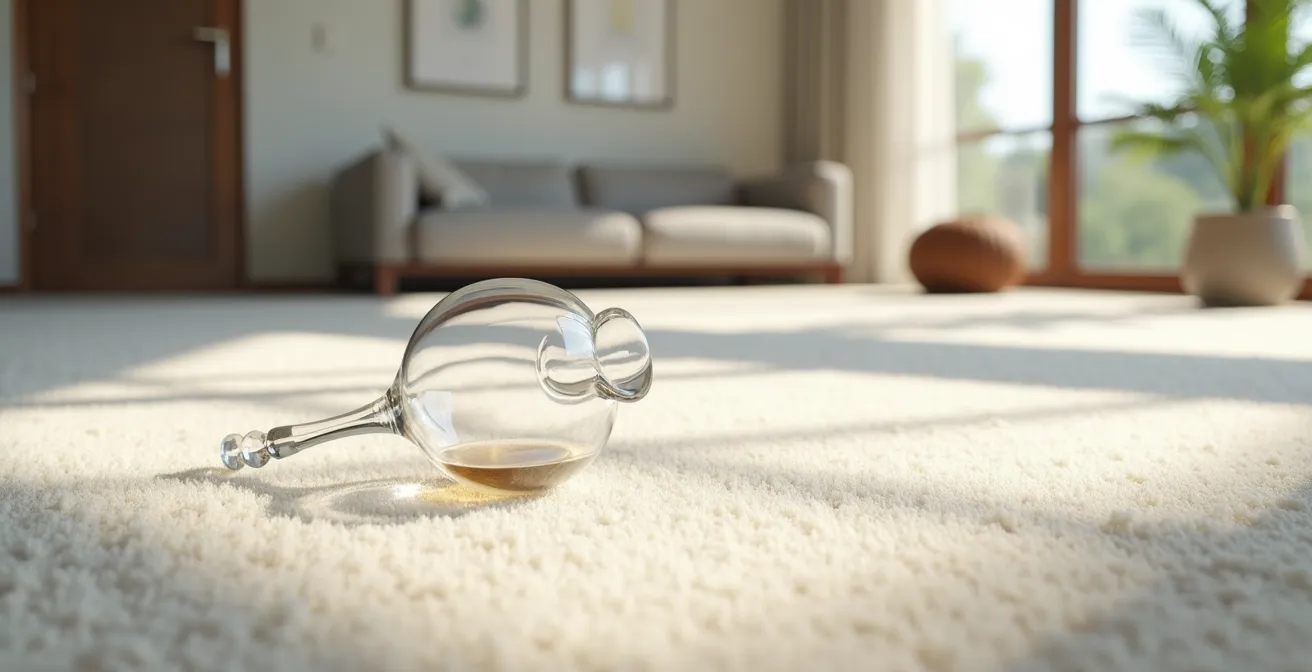
You might assume a carpet is part of your “contents,” but insurers often see it differently. The classification can hinge on how the carpet is installed. An area rug that you can roll up and take with you is clearly contents. But a wall-to-wall fitted carpet might be considered a permanent fixture of the house, and therefore part of the building itself. This single detail can derail a claim entirely.
Case Study: The Building vs. Contents Coverage Trap
Homeowners often face denied claims when the line between building and contents is blurred. For instance, a claim for a stained, fully fitted carpet under a contents policy may be rejected because the insurer classifies it as part of the building’s structure. To be covered, the homeowner would have needed accidental damage on their buildings insurance. This confusion highlights the importance of understanding precisely how your policy defines the different parts of your home.
To ensure you’re covered for that wine spill, you need to verify two things. First, that you have an “all-risk” accidental damage add-on. Second, you must understand whether that coverage applies to your buildings policy, your contents policy, or both. For maximum protection, having combined coverage is the safest bet, eliminating the gray area between a fixture and a possession.
Chewed Drywall or Scratched Doors: What Damage by Pets Is Actually Covered?
For parents of “fur babies,” this is one of the most confusing areas of home insurance. The unfortunate truth is that damage directly caused by your pets—such as chewing, scratching, tearing, or soiling—is almost universally excluded from standard home insurance policies, even those with accidental damage cover. From an insurer’s perspective, this type of damage is not “unforeseen.” It’s considered a predictable consequence of owning an animal and falls under the category of general wear and tear or a failure to prevent the damage.
However, the story changes when your pet is the indirect cause of an accident. This is the “chain of events” principle. If your dog gets the “zoomies” and knocks over an expensive vase or pulls a laptop off a table, the resulting damage to the item is often covered. Here, the insurer isn’t covering the pet’s action, but the sudden and accidental breaking of the item, which is a covered event. The pet was simply the catalyst. This distinction is subtle but critical.
This table illustrates the fine lines insurers draw when it comes to damage related to animals in the home.
| Type of Damage | Coverage Status | Example |
|---|---|---|
| Direct pet damage (chewing, scratching) | Excluded | Dog chewing furniture, cat scratching carpet |
| Accidental damage FROM pet’s action | Often Covered | Pet knocking over TV while running |
| Guest’s pet damage | May be covered under liability | Visitor’s dog damages your property |
| Wild animal damage | Usually covered | Raccoon breaking in and causing damage |
It’s also worth noting the difference between property damage and liability. While your policy won’t cover your dog chewing your own sofa, your liability coverage is there to protect you if your dog damages someone else’s property or, more seriously, bites someone. The financial stakes in liability are significant; in the US alone, dog bite claims cost insurers a total of $882 million in a single recent year.
The DIY Mistake: Is It Covered If You Accidentally Drill Through a Pipe?
The ambition of a weekend DIY project can quickly turn into a household disaster. Accidentally drilling into a water pipe or electrical wire is a common fear, and insurance coverage for these mishaps is not always straightforward. Generally, if you have accidental damage cover on your buildings insurance, the damage from a genuine DIY mistake should be covered. This includes the cost to repair the burst pipe and any resulting water damage to walls, floors, and ceilings—often referred to as “ensuing damage.”
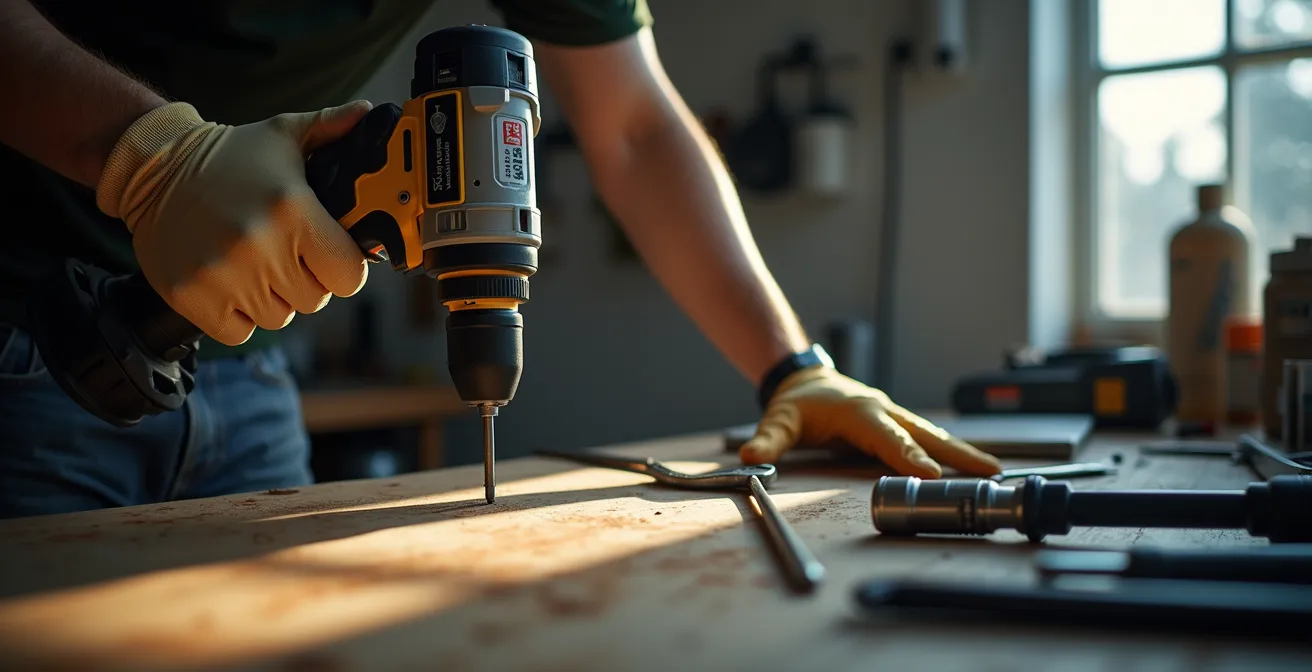
However, coverage comes with an expectation of “due care.” Insurers may deny a claim if the work is deemed reckless or grossly negligent. While you don’t need to be a professional, you are expected to take reasonable precautions. For example, using a stud finder or a pipe detector before drilling into a wall is considered a reasonable step. Failure to do so could be interpreted as negligence, not an accident. The policy is there to protect you from an unforeseen mistake, not from a complete lack of preparation.
Furthermore, policies draw a line at faulty workmanship. The cost to repair the pipe you drilled is covered, but if you installed a new sink and the plumbing fails weeks later due to your poor installation, that gradual leak and the cost to fix your work would likely be excluded. The key is the sudden and accidental nature of the event. A drill hitting a pipe is sudden; a slow drip from a bad connection is a maintenance issue. Before starting any significant project, documenting the area and using the right tools can be crucial evidence in proving your incident was a true accident.
When to Claim a Broken Window: The Deductible Math Problem?
When an accident happens, the first instinct is often to call the insurance company. However, making a claim isn’t always the most financially sound decision, especially for smaller incidents like a single broken window. This is due to a simple but crucial calculation: the repair cost versus your policy’s deductible. The deductible is the amount you have agreed to pay out-of-pocket for any claim before the insurer contributes. If it costs $600 to replace a window and your deductible is $500, you would only receive $100 from the insurer.
This is where “the deductible trap” comes into play. While getting $100 might seem better than nothing, it ignores the hidden long-term cost of making a claim. Any claim on your record, no matter how small, can lead to an increase in your premiums for several years to come. Many insurers raise premiums by 20-40% after a claim is filed. Over three to five years, that increase can easily surpass the $100 you received. In this scenario, you would have been financially better off paying for the entire repair yourself and preserving your claims-free history.
This financial reality is why so few homeowners actually make claims. According to the Insurance Information Institute, in 2023, only 5.3% of insured homes had a claim. Experienced homeowners understand that insurance is best used as a safety net for catastrophic events, not as a fund for minor repairs. Before filing a claim, always do the math: calculate your net payout (repair cost minus deductible) and weigh it against the potential cost of increased premiums over the next several years.
Standard vs Premium: Is the Extra $200/Year Worth the Upgrade?
Deciding whether to upgrade to a policy with accidental damage cover often comes down to a simple question: is the extra cost worth the peace of mind? The price difference can be surprisingly small when you consider the potential cost of replacing modern electronics or furniture. The upgrade is not just one single add-on; it’s typically broken down into coverage for buildings and for contents, which can be purchased separately or together.

The value proposition becomes clear when you analyze your lifestyle. For a family with young children or pets, the risk of spills on carpets, drawings on walls, or broken electronics is significantly higher. In this environment, a small annual investment for contents accidental damage can be a wise financial decision. Similarly, for homeowners embarking on DIY renovations, adding buildings accidental damage cover provides a crucial safety net against costly mistakes like drilling through a pipe. The cost-benefit analysis often favors the upgrade.
The following table, with costs adapted from UK market averages, provides a snapshot of what you might expect to pay for this added protection and what it typically covers. It helps illustrate how a relatively minor annual expense can shield you from a much larger, unexpected bill.
| Coverage Type | Average Extra Cost/Year | What’s Covered | Best For |
|---|---|---|---|
| Buildings Accidental Damage | $35 | Structural damage, DIY accidents | Homeowners doing renovations |
| Contents Accidental Damage | $15 | Furniture, electronics, carpets | Families with children |
| Combined Coverage | $50 | Both buildings and contents | Maximum protection seekers |
Ultimately, the extra $20-$50 per year is not just buying coverage; it’s buying the assurance that a moment of clumsiness won’t turn into a financial crisis. For a busy, modern family, that peace of mind is often worth every penny.
Key Takeaways
- Accidental damage is a specific add-on, not standard, and covers only “sudden and unforeseen” events.
- Coverage is split between “buildings” (fixtures like fitted carpets) and “contents” (movable items like rugs).
- Making small claims can be a financial mistake due to deductibles and future premium increases.
Lost vs Stolen: Why “Mysterious Disappearance” Coverage Is Essential for Earbuds?
In the world of insurance, there’s a significant difference between an item being “stolen” and being “lost.” Theft requires evidence of a crime, like a police report for a break-in. Losing an item is murkier. If you can pinpoint how you lost something—for example, your phone falling into a lake—it may be covered under a standard accidental damage policy as a specific, identifiable event. But what about items that simply vanish? Your expensive wireless earbuds were on the counter, and now they’re gone. This is where “mysterious disappearance” comes in.
Mysterious disappearance is a specific type of coverage, often included within personal possessions or high-value item add-ons, designed for situations where an item is gone without any explanation. There’s no evidence of theft and no clear “accident” to point to. This is increasingly vital for small, high-value, portable items like jewelry, watches, and modern electronics like earbuds, which are easy to misplace.
However, this coverage isn’t a blank check. To prevent fraud, insurers apply strict conditions. Policies often include sub-limits, capping the payout for a single item (e.g., $1,500) unless it’s been scheduled separately on your policy. Insurers also scrutinize claim history. A one-time claim for a lost wedding ring is more likely to be approved than recurring claims for “disappeared” gadgets. The coverage is designed to protect against genuine, unexplainable loss, not carelessness or repeated forgetfulness.
Why “Standard Policies” Are Often Insufficient for Modern Homes?
The traditional home insurance policy was designed for a different era. It was built around a model of a home as a place for living, not working, and was not equipped to handle the complexities of modern technology. Today, with the rise of remote work and smart homes, these standard policies often fall short, leaving dangerous coverage gaps that many homeowners are unaware of until it’s too late.
One of the most significant gaps relates to working from home. A standard policy provides very limited coverage for business property. For instance, data from GoCompare shows that standard policies often have very low limits for business property at home, typically just $2,500. If you have an expensive work-issued laptop, multiple monitors, and other professional equipment, you could be severely underinsured in the event of a fire or theft. Your employer’s insurance may not cover it, and your personal policy won’t be sufficient.
Case Study: The Smart Home System Failure Gap
The interconnected nature of smart homes creates new risks that old policies don’t address. Consider a scenario where a faulty smart thermostat fails, causing your pipes to freeze and burst. An insurer could argue this is a “system failure,” which is a common exclusion. A standard policy wasn’t built for this ambiguity, leaving the homeowner in a coverage limbo. It’s no longer just about a pipe bursting; it’s about the complex chain of technological events that led to it.
From work-from-home setups to the integrated risks of smart technology, the modern home is more complex than ever. Standard “named perils” policies are becoming increasingly inadequate. They weren’t designed to cover a software glitch that causes physical damage or to properly insure a home office. This makes reviewing your policy and considering upgrades like accidental damage and appropriate business property endorsements more critical than ever.
Now that you understand the principles behind accidental damage coverage, the next logical step is to review your own policy with these insights in mind to ensure your family has the protection it truly needs.
Frequently Asked Questions About Mysterious Disappearance
What’s the difference between ‘lost’ and ‘mysterious disappearance’?
‘Lost’ means you know the general circumstances of the loss (e.g., you dropped it overboard from a boat), creating a specific event for a claim. In contrast, ‘mysterious disappearance’ covers items that were securely in your possession and then vanished without any explanation of how or where.
What are typical sub-limits for electronics?
Policies often have strict caps, or sub-limits, for items prone to disappearance, like jewelry or electronics. A typical limit might be $1,500 to $2,000 per item. For anything more valuable, you would need to ‘schedule’ it separately on your policy to insure it for its full value.
How do insurers prevent fraud with this coverage?
Insurers carefully examine claim history and look for patterns. This coverage is intended for credible, first-time claims on low-to-mid value items. Multiple or recurring claims for ‘disappeared’ items will raise red flags and are likely to be investigated and denied, as it suggests either fraud or a level of carelessness the policy is not designed to cover.