
Your “comprehensive” policy is a marketing term, not a guarantee; it’s a legal document riddled with deliberate gaps and ‘escape hatches’ designed to limit payouts.
- Most policies use an “anti-concurrent causation” clause to deny claims where a covered event (like wind) and an excluded event (like a flood) occur together.
- Vague definitions for terms like “earth movement” are weaponized to shift the burden of proof—and thousands in engineering costs—onto you.
Recommendation: Stop trusting the label on the box. The only defense is to learn the insurer’s playbook and audit your policy for these specific traps before you ever need to file a claim.
You paid the premium. You checked the box for “comprehensive” coverage. You sleep soundly at night, believing your single largest asset—your home—is protected from just about anything life can throw at it. This sense of security is precisely what the insurance industry sells. And it’s a dangerous illusion.
The common wisdom is to buy the best policy you can afford, assuming that a higher premium equates to broader protection. But what if the very term “comprehensive” is the most misleading part of the contract? What if it’s not an ironclad shield but a Swiss cheese net, meticulously designed with legal escape hatches that insurers use to deny claims you thought were covered? The fine print isn’t just boring legal jargon; it’s the rulebook for a game you’re forced to play, and the odds are stacked against you.
This isn’t another guide that simply lists the standard exclusions. This is a look inside the insurer’s playbook. We will dissect the difference between policies not by their marketing names, but by who carries the burden of proof. We will expose the weaponized definitions and clauses that cost homeowners fortunes. Forget what the policy is *called*. It’s time to understand what it *does*—and what it was designed *not* to do.
To truly understand the vulnerabilities in your coverage, we will explore the critical distinctions that define your protection. This article is structured to guide you through the insurer’s playbook, from fundamental policy types to the specific clauses that create the biggest coverage gaps.
Summary: Deconstructing the Myths of “Comprehensive” Home Insurance
- Why “All-Risk” Policies Are Safer Than Named Perils for Old Homes?
- The 3 Exclusions That Even Comprehensive Plans Refuse to Cover
- Named Perils vs Comprehensive: Which Choice Is Best for a $300k Home?
- The Misunderstanding That Costs Homeowners $5,000 in Earth Movement Claims
- When to Upgrade Your Coverage Limits: The 3 Life Events to Watch
- What Does a Standard HO-3 Policy Actually Cover in Plain English?
- Why Mold Removal Is Often Excluded Despite Water Coverage?
- Why “Standard Policies” Are Often Insufficient for Modern Homes?
Why “All-Risk” Policies Are Safer Than Named Perils for Old Homes?
Let’s cut through the jargon. There are fundamentally two types of property insurance: “Named Perils” and “All-Risk” (often marketed as “Comprehensive” or “Open Perils”). A Named Perils policy is a whitelist; it only covers the specific causes of loss listed in the contract (e.g., fire, lightning, windstorm). If it’s not on the list, you’re not covered. It’s cheap, but it puts the burden of proof squarely on you. You must prove one of the named events caused your damage.
An “All-Risk” policy, like an HO-5 or the dwelling portion of an HO-3, flips the script. It’s a blacklist; it covers everything *unless* it’s specifically excluded. This is a monumental shift. With an all-risk policy, the burden of proof is on the insurer. They have to prove that your loss was caused by an event listed in their exclusions page. For older homes, with their unique quirks and potential for unusual failures, this is a critical safeguard. You’re not left trying to prove a bizarre electrical failure was caused by a “named” power surge; the insurer has to prove it falls under a specific exclusion like “wear and tear.”
While the majority of homeowners are in a hybrid policy, it’s crucial to understand where the all-risk protection applies. Data shows that while nearly 79% of single-family homes have HO-3 coverage, many owners don’t realize this only provides all-risk coverage for the house structure itself, not their personal belongings. This creates a dangerous false sense of security, which we will dissect later.
Action Plan: Assess Your True Coverage Type
- Understand the burden of proof: Locate the “Coverages” section of your policy. If it lists specific perils, you have the burden. If it says it covers “direct physical loss” and then lists exclusions, the insurer has the burden.
- Document home maintenance: Create a digital folder with receipts and photos of all major repairs and upkeep. This is your primary defense against a “neglect” or “wear and tear” denial.
- Review policy exclusions: Don’t just read the summary. Find the “Exclusions” section. Even “all-risk” policies explicitly exclude flood, earthquake, and war. What else is on your policy’s list?
- Consider an HO-5 upgrade: If your personal property is only covered for named perils (common in HO-3 policies), ask for a quote to upgrade to an HO-5. This extends all-risk coverage to your contents.
- Calculate the real cost: An upgrade to an HO-5 policy often costs only 10-15% more for significantly broader coverage and, more importantly, a shift in the burden of proof.
The 3 Exclusions That Even Comprehensive Plans Refuse to Cover
The word “comprehensive” leads to a fatal assumption: that it covers everything. It doesn’t. Every single residential policy, no matter how expensive, contains a list of non-negotiable exclusions. Think of these as the fundamental risks that the insurance market refuses to take on without a separate, specific policy. The big three are almost always flood, earthquake, and other forms of “earth movement” like landslides or sinkholes.
The reasoning is one of correlated risk. An insurer can handle a few dozen houses catching fire in a state. They cannot handle every single house in a coastal county being flooded simultaneously. The financial exposure is too great. This leads to a massive coverage gap. For instance, despite the risk, only 12% of homeowners have flood insurance, a dangerously low number. But the real trap isn’t just the exclusion itself; it’s how it interacts with other events.
This is where insurers deploy a powerful legal tool: the anti-concurrent causation clause. This clause states that if a loss is caused by a combination of a covered event (like wind from a hurricane) and an excluded event (like the resulting floodwater), the insurer can deny the entire claim. They will argue the flood, not the wind, was the dominant cause, leaving you to fight a losing battle. This is the ultimate “escape hatch.”
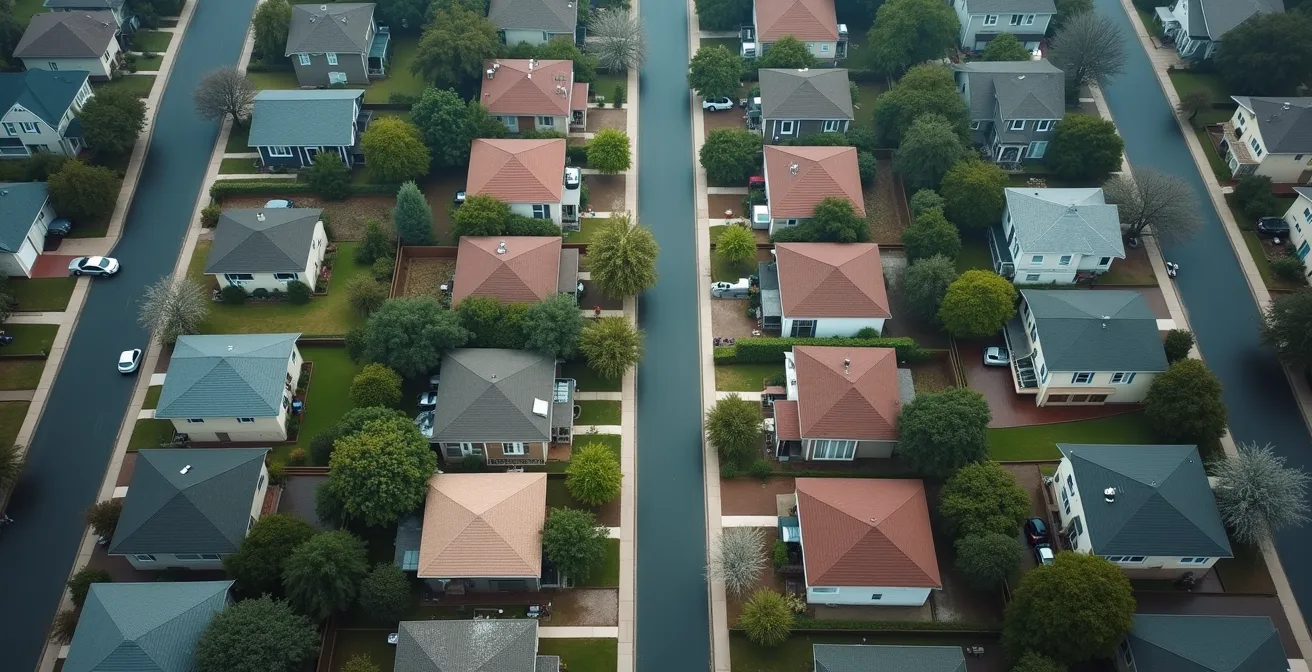
As this visual metaphor suggests, these exclusions are not small footnotes; they are foundational gaps in the landscape of your protection. The anti-concurrent causation clause is the legal mechanism that allows the insurer to point to one of these excluded events as the “real” cause of damage, even when a covered event was clearly involved. In areas prone to hurricanes, wildfires followed by mudslides, or any combined disaster, this clause is the single greatest threat to your policy’s value.
Named Perils vs Comprehensive: Which Choice Is Best for a $300k Home?
The question isn’t about the value of the home; it’s about your tolerance for risk and your willingness to fight your insurer. For a typical $300,000 home, the owner is often choosing between a standard HO-3 (“comprehensive” for the structure, “named perils” for belongings) and a premium HO-5 (“comprehensive” for both). The price difference is often just a few hundred dollars a year, but the strategic difference is massive.
The HO-3 is the industry standard for a reason: it’s a compromise that favors the insurer. It gives them the marketing win of “comprehensive” dwelling coverage while severely limiting their exposure on your personal property. The HO-5 is true comprehensive coverage, and the decision to upgrade should be based on a clear understanding of what you gain. The key is the shift in the burden of proof for your belongings and how value is calculated.
This comparison from Insurance.com highlights the critical differences. Notice how the burden of proof and value settlement terms change, which are far more important than the list of perils.
| Coverage Aspect | HO-3 Policy | HO-5 Policy |
|---|---|---|
| Dwelling Coverage | Open Perils | Open Perils |
| Personal Property | Named Perils Only | Open Perils |
| Typical Premium Difference | Base Rate | 10-15% Higher |
| Burden of Proof | You prove named peril caused loss | Insurer proves exclusion applies |
| Value Settlement | Often ACV (depreciated) | Usually RCV (full replacement) |
As a leading insurance analysis from Openly’s guide points out, the decision framework should be less about the home’s sticker price and more about the owner’s risk profile. It notes:
It’s not the home’s value, it’s your risk profile
– Insurance industry analysis, Openly Insurance comprehensive guide
This means if you own high-value electronics, art, or equipment, the slight premium increase for an HO-5 is a small price to pay to avoid having to prove a specific named peril destroyed them, and to ensure you get their full replacement cost, not a depreciated value.
The Misunderstanding That Costs Homeowners $5,000 in Earth Movement Claims
Of all the exclusions, “earth movement” is perhaps the most cunningly defined. Homeowners reasonably assume this means large-scale events like earthquakes or landslides, which they know require separate coverage. They don’t realize the definition is a weaponized tool used to deny claims for foundation cracks and wall shifts that seem entirely unrelated.
The insurer’s playbook is simple: any damage involving shifting soil is immediately categorized under the “earth movement” exclusion, and the claim is denied. The onus is then on you, the homeowner, to prove the damage was not from natural settling but from a different, *covered* peril. This is the fight over “proximate cause”—the primary event that set the loss in motion.
This is where the $5,000 misunderstanding comes into play. As a case study on coverage gaps highlights, the battle over proximate cause is not a simple argument; it’s a technical one that requires expert testimony. The case study reveals the critical distinction: if a covered event, like a burst water main, saturates the soil and causes it to shift, the damage *may* be covered. But if the shift is from natural soil saturation after heavy rains, it’s excluded. To prove the former, homeowners are often forced to hire their own geotechnical engineers for $5,000 or more, just to produce a report that can challenge the insurer’s default denial. The insurance company is betting you won’t spend that money to fight a $10,000 claim.
Case Study: The Proximate Cause Battle
According to an analysis by IZC Insurance, the fight over proximate cause is a common and costly battle. The insurer’s default position is to label any foundation issue as “earth movement.” The homeowner must then prove a covered peril was the true cause. For example, proving that a slow leak from a sewer line (a covered peril) caused the soil to become unstable requires expensive soil testing and engineering reports, an upfront cost that deters many from pursuing a valid claim.
When to Upgrade Your Coverage Limits: The 3 Life Events to Watch
Your homeowner’s policy isn’t a “set it and forget it” document. It’s a snapshot of your home’s value and your lifestyle at a specific point in time. As your life changes, your coverage needs can rapidly outpace what your standard policy provides. Ignoring this can leave you dangerously underinsured, and there are three key life events that should be automatic triggers for a policy review.
The first and most obvious is any major renovation or addition. Your dwelling coverage is based on the cost to rebuild your home. If you add a second story or finish a basement, that cost skyrockets. Failing to increase your coverage limit leaves a gap that you’d be forced to pay out-of-pocket after a total loss. With industry data showing that over 55% of homeowners planned remodeling projects in 2022, this is a widespread and often overlooked risk.
The second is a change in how you use your home, specifically starting a home-based business or acquiring high-risk items. Standard policies provide almost no liability protection for business activities and have low sub-limits for things like business equipment. Likewise, adding a pool or trampoline dramatically increases your liability risk, often requiring a separate rider or an umbrella policy.

Finally, a significant increase in your personal assets or income should prompt a review. As your net worth grows, the basic liability coverage in your homeowner’s policy may no longer be sufficient to protect you from a major lawsuit. This is the point where an umbrella liability policy becomes not a luxury, but a necessity for asset protection. These moments of change are crucial checkpoints to ensure your insurance policy keeps pace with your life.
What Does a Standard HO-3 Policy Actually Cover in Plain English?
The HO-3 is the workhorse of the insurance industry, the most common policy sold to single-family homeowners. It’s also the source of the most confusion. In plain English, an HO-3 is a two-part policy with a split personality. It gives you good coverage on one hand and takes it away with the other.
Here’s the breakdown: 1. Your Dwelling (The Structure): This part gets “all-risk” (open peril) coverage. This is the good part. It means the building itself is covered from any cause of damage unless it’s specifically excluded in the policy. 2. Your Personal Property (Your Stuff): This part gets “named-peril” coverage. This is the catch. Your furniture, electronics, clothes, and other belongings are *only* covered if the damage is caused by one of the 16 specific perils listed in the policy, such as fire, theft, or windstorm.
This hybrid nature is a brilliant piece of risk management for the insurer and a potential nightmare for you. It allows them to market the policy as “comprehensive” while quietly limiting their exposure on all your possessions. Meanwhile, premiums continue to climb, with one dataset revealing a 55.47% cumulative premium increase since 2019 for coverage that is full of such compromises.
Case Study: The Power Surge Trap
Hippo Insurance provides a perfect example of this coverage trap. Imagine a massive power surge fries your brand new 8K television, home theater system, and computer. With a standard HO-3 policy, the first question the adjuster will ask is, “What caused the surge?” If you can prove it was caused by a lightning strike (a named peril), you’re covered. But if the surge was from a utility company malfunction or an unknown origin, it’s not a named peril. In that case, you’re out of luck. Your claim is denied. The HO-3’s split personality means the cause of loss matters immensely for your belongings.
Why Mold Removal Is Often Excluded Despite Water Coverage?
Here is one of the most frustrating and common claim denials: your policy covers water damage, but it won’t cover the resulting mold. It feels like a bait-and-switch, but from the insurer’s perspective, it’s a clear-cut application of policy language centered on the concept of time and mitigation.
The insurance playbook separates the initial event from its consequences. The “sudden and accidental” burst pipe is a covered peril. Water immediately gushing out and damaging your drywall is part of that single event. However, the mold that begins to grow 48-72 hours later is viewed as a separate issue. Insurers argue this secondary damage is not the result of the burst pipe, but the result of the homeowner’s “failure to mitigate” the damage in a timely manner. They put the responsibility on you to prevent the mold from ever starting.
This perspective is clearly articulated in many industry analyses. As one report on coverage gaps states, the view is that the initial water damage is covered, but subsequent damage has a different cause.
The initial burst pipe is a covered, sudden event. The resulting mold that grows over weeks is often considered a separate issue caused by the homeowner’s failure to immediately mitigate
– Insurance coverage analysis, Home Insurance Coverage Gap Report
This means your actions in the first 48 hours are critical to preserving any hope of coverage. You must immediately document the damage with photos, contact your insurer to open a claim, and, most importantly, begin professional water extraction and drying. Keep all receipts and a detailed timeline. This documentation is your only defense against the inevitable “failure to mitigate” argument.
Key Takeaways
- “Comprehensive” is a marketing term; true protection lies in understanding the exclusions and the burden of proof.
- The “anti-concurrent causation” clause is a primary tool used to deny claims in multi-event disasters like hurricanes.
- Vague definitions for terms like “earth movement” and “mitigation” are deliberately used to shift financial responsibility to the policyholder.
Why “Standard Policies” Are Often Insufficient for Modern Homes?
The standard homeowner’s policy, the HO-3, was designed decades ago. It was built for a world of simple construction, dumb appliances, and predictable risks like fire and theft. That world no longer exists. Today’s modern home is a complex ecosystem of smart devices, sophisticated building materials, and new vulnerabilities that old policy language was never designed to address.
This creates significant and growing coverage gaps. The risks facing a modern home are not the same as they were in 1985. The “standard policy” is a relic, and relying on it is like using a 20th-century map to navigate a 21st-century city. You’re going to get lost, and it’s going to be expensive.
The most glaring example of this is the rise of the smart home. Your thermostat, security system, locks, and even appliances are now connected to the internet, creating a new vector of risk: cyber-attacks. A standard policy has no language to properly address this, creating bizarre and uncovered claim scenarios.
Case Study: The Hacked Thermostat Gap
A Deloitte analysis on bridging insurance gaps illustrates this perfectly. Imagine a hacker gains access to your smart thermostat in the middle of winter and turns off your heat. The pipes freeze and burst, causing tens of thousands of dollars in water damage. Your policy covers damage from “freezing,” but it likely has an exclusion for damage caused by a “cyber event” or electronic data manipulation. Is the proximate cause the freezing (covered) or the hack (excluded)? This gray area is a battleground where the homeowner, armed with an outdated policy, is almost certain to lose.
This is just one example. Similar gaps exist for specialized construction materials, home-sharing rentals, and liability from drone usage. The world has changed, but the standard policy has not kept pace. Relying on it is an act of blind faith in a document that is no longer fit for its purpose.
Stop being a passive premium-payer and become an active risk manager. The next logical step is not to shop for a “better” policy, but to take your current contract and audit it against the escape hatches and traps we’ve exposed. Demand answers, get riders for the gaps, and build a fortress of true security, not one made of marketing promises.