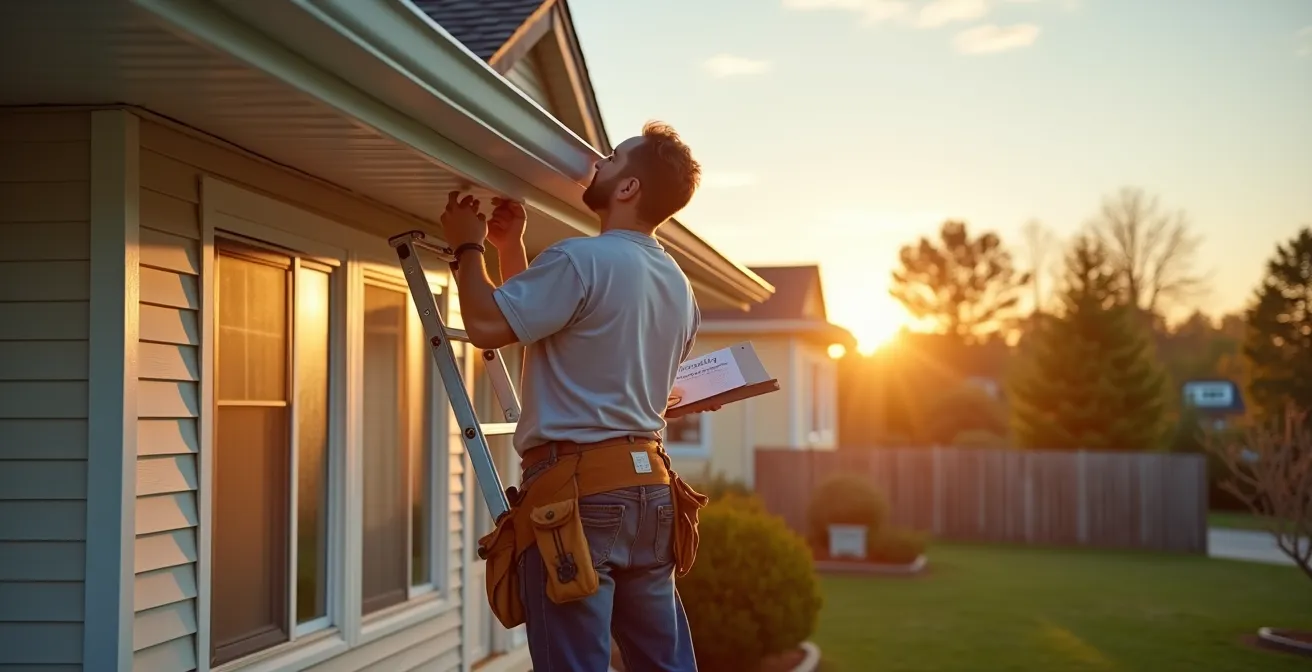
A homeowner’s most costly mistake is viewing insurance as a guarantee instead of a contract that demands proof of “due diligence.”
- Most water damage claim denials are not about the damage itself, but about the homeowner’s inability to prove the damage was “sudden and accidental” rather than the result of gradual neglect.
- Insurers operate on evidence. Without a dated, documented maintenance log, any long-term issue like a slow leak or a deteriorating roof is presumed to be a pre-existing condition you failed to address.
Recommendation: Shift your mindset from “doing maintenance” to “documenting compliance.” This guide provides the procedural protocol for creating an evidence log that an insurance adjuster cannot easily dismiss.
Many homeowners operate under a dangerous assumption: that their insurance policy is a catch-all safety net for any disaster. They see a leak, they file a claim. But when the denial letter arrives citing a “lack of maintenance” or “gradual damage” clause, the financial and emotional shock is profound. The reality is that your policy is a strict contract. It protects you from sudden, unforeseen events, not from the predictable consequences of neglect. The burden of proof is not on the insurance company to prove you were negligent; it’s on you to prove you were diligent.
The common advice is to simply “perform regular maintenance.” This is dangerously incomplete. In the eyes of an underwriter, an action that is not documented does not exist. A verbal claim that you “checked the furnace last fall” holds no weight against their findings of a corroded, long-neglected heat exchanger. The disconnect between a homeowner’s efforts and an insurer’s requirements is where most water damage claims fail. It’s not about malice; it’s about contractual obligation and evidence.
This is where we must reframe the entire concept of home upkeep. The true key to protecting your claim is not the maintenance itself, but the creation of a systematic, time-stamped compliance protocol. It’s about building an irrefutable “Evidence Log” that establishes a baseline condition for your property and documents every inspection, repair, and professional service. This log transforms you from a potential victim of a policy exclusion into a prepared partner who can demonstrate, with proof, that the damage was indeed sudden and that you have upheld your end of the contract.
This guide outlines the specific, procedural inspections required to build that evidence log. We will cover the critical systems from the roof to the basement, detailing not just what to check, but precisely how to document it in a way that satisfies an insurer’s stringent criteria. This is your playbook for neglect-proofing your home and your insurance claim.
Summary: A Homeowner’s Guide to Preventing Insurance Claim Denials
- How to Inspect Your Roof for Granule Loss Without Climbing a Ladder?
- The Furnace Check-Up That Saves You from a “Lack of Maintenance” Denial
- Wood Stove or Fireplace: Which Requires More Frequent Inspections?
- When to Test Your Sump Pump: The Schedule That Prevents Basement Floods
- The Dead Branch Theory: How to Identify Liability Risks in Your Trees?
- The Aging Roof Signal That Insurers Use to Cancel Policies
- When to Re-Caulk Windows: The 5-Year Cycle for Energy and Water?
- Why Gradual Leaks Are the Silent Killers of Home Insurance Claims?
How to Inspect Your Roof for Granule Loss Without Climbing a Ladder?
An aging roof is a primary red flag for insurers. Granule loss on asphalt shingles is the first sign of this deterioration, exposing the underlying mat to UV rays and accelerating failure. A claim for a roof leak can be swiftly denied if the insurer determines the roof was already past its service life. You must document that its condition was actively monitored. Climbing a ladder is risky and unnecessary; a ground-level protocol is safer and produces better evidence.
Your primary evidence points are the gutters and downspouts. After a heavy rain or wind event, check the outlets for an accumulation of black or colored granules. A small amount is normal, but a sudden increase is a critical data point for your maintenance log. To formalize this process, use a telescoping pole with a smartphone mount. This allows you to capture high-resolution, time-stamped video of your roof’s surface from the safety of the ground. Narrate the video, noting the date and any visible changes like curling shingles or areas of significant granule loss.
This digital documentation is your best defense. A commercial property owner successfully argued for an additional $127,000 in a claim payment by leveraging detailed, time-stamped photos and inspection reports. They proved the insurer’s initial assessment was wrong by having a pre-existing, documented condition baseline. Your log, filled with photos of granule collection and periodic videos, serves the same purpose. It demonstrates proactive monitoring and helps differentiate between long-term wear and sudden, event-based damage.
To build your roof’s evidence log, follow this simple procedure:
- Monthly Gutter Check: After cleaning gutters, check for granule accumulation. Photograph any significant amounts next to a coin for scale and label with the date.
- Event-Based Photo Log: After major storms, take photos of downspout outlets to document any sudden, heavy loss of granules.
- Bi-Annual Video Scan: In the spring and fall, use a telescoping pole to record a slow video scan of all roof surfaces.
- Create a “Roof Health Log”: Store all photos and videos in a dedicated, cloud-based folder. This creates an organized, chronological record of your roof’s condition over time.
This disciplined approach refutes any potential claim of neglect. It establishes that you were aware of your roof’s condition and were actively monitoring its lifespan, a key requirement for policy compliance.
The Furnace Check-Up That Saves You from a “Lack of Maintenance” Denial
Water damage from an HVAC system, such as a clogged condensate line or a failed heat exchanger, is a classic trigger for a “lack of maintenance” claim denial. The insurer’s argument is simple: the failure was not sudden but the result of months or years of neglect. This is an easy argument for them to win, as recent findings show that less than 20% of homeowners perform regular maintenance like checking appliance hoses. To counter this, your maintenance log must clearly distinguish between required professional servicing and your own documented due diligence.
An adjuster will look for two things: records of annual professional servicing and evidence of homeowner diligence. A professional service invoice is non-negotiable. It should detail the work performed, list the technician’s certifications, and include a report on the heat exchanger’s integrity. This single document can be the difference between an approved claim and a full denial for a major system failure.
However, your own actions matter. Monthly filter changes and visual inspections, when documented, show a pattern of care. When you change the filter, take a photo of the new filter in place with your phone, which automatically adds a date stamp. Keep a simple written log in a notebook or a digital file, noting the date you visually inspected the unit for leaks or unusual noises. While these actions may not prevent every failure, they build a powerful narrative against neglect.
The following table outlines the documentation an insurer expects to see. Your goal is to have an entry for each category, demonstrating a comprehensive approach to maintenance.
| Task Type | Frequency | Documentation Required | Insurance Impact |
|---|---|---|---|
| DIY: Filter Changes | Monthly | Photo with date stamp | Shows basic diligence |
| DIY: Visual Inspection | Monthly | Maintenance log entry | Demonstrates awareness |
| Professional Service | Annual | Detailed invoice with technician certification | Critical for claim approval |
| Professional Testing | Annual | Heat exchanger integrity report | Prevents denial for neglect |
This structured approach moves furnace maintenance from a forgotten chore to a critical part of your home’s compliance protocol. It provides the specific evidence needed to prove your system was cared for, forcing the insurer to focus on the event itself, not your history.
Wood Stove or Fireplace: Which Requires More Frequent Inspections?
Both wood stoves and fireplaces present significant risks, not just from fire but from water damage caused by a faulty chimney. A cracked flue, a damaged crown, or improper flashing can allow water to seep into the home’s structure for years, leading to rot and mold. When discovered, this is almost always classified as gradual damage and denied. The frequency of inspection required depends heavily on the type of unit and your usage patterns. A wood stove, typically used more often and at higher temperatures, demands a more rigorous inspection schedule than a decorative gas fireplace.
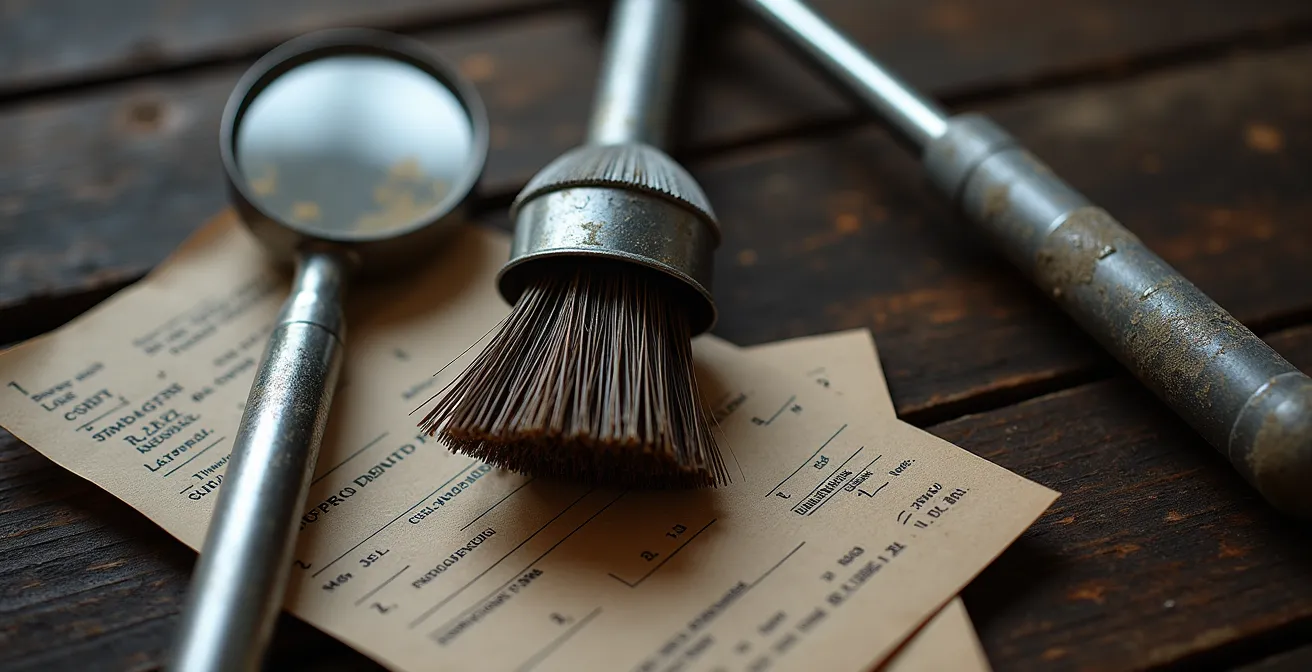
The critical piece of evidence for this system is the Certificate of Chimney Sweeping. After any professional cleaning or inspection, you must obtain and file this document. It serves as third-party verification of your chimney’s condition at a specific point in time. For an insurer, this certificate is proof that you have taken reasonable steps to maintain a high-risk component of your home. Without it, any claim related to chimney leaks is highly vulnerable to denial.
Your inspection schedule must be risk-based. The more you use your appliance and the more resinous the wood you burn (like pine), the more frequently you must inspect and clean to prevent creosote buildup, which can hide or cause damage. Your evidence log should reflect this risk-based approach. For a wood stove used daily, your log should show monthly visual checks and bi-annual professional servicing. For a gas fireplace used occasionally, an annual professional check is sufficient.
To create a defensible inspection schedule, adhere to the following risk-based protocol:
- Daily Wood Stove (Softwood): Visually inspect the flue every two months. Schedule a professional cleaning and obtain a certificate every six months.
- Weekend Fireplace (Hardwood): Visually inspect every three months. Schedule a professional cleaning and obtain a certificate annually.
- Gas Fireplace (Occasional Use): Perform a visual check of the vents and logs quarterly. Schedule a professional inspection and service annually.
- Pellet Stove (Daily Use): Inspect the burn pot and exhaust monthly. Schedule professional service twice per year.
Documenting this schedule with invoices and certificates demonstrates a sophisticated understanding of risk management, making it difficult for an insurer to claim negligence.
When to Test Your Sump Pump: The Schedule That Prevents Basement Floods
The sump pump is your last line of defense against a flooded basement, an area where 98% of basements experience some level of water damage. A failed sump pump during a storm is a catastrophe, and an insurance claim can be denied if the pump shows signs of long-term seizure or disrepair. You cannot wait for the rainy season to discover it’s not working. Testing must be proactive and, most importantly, documented on video. A simple test takes five minutes and creates irrefutable proof of the pump’s operational status.
Your testing schedule should be event-driven, not just calendar-based. Key trigger events include the start of the rainy season, any power outage, prolonged dry spells, and periods of freezing temperatures. For each test, you will pour about five gallons of water into the sump pit. Your goal is to document the full cycle: the float rising, the pump activating, the water draining, and the pump shutting off automatically. This entire sequence should be filmed in one continuous, time-stamped video on your smartphone.
This video evidence is crucial. It proves the pump was in working order immediately before a storm or after a potential issue like a power surge. Some homeowners are even adopting smart home technology, as noted in one case where homeowners installed whole-home automatic shutoff valves. These systems provide automatic, time-stamped documentation of performance, and some insurers now offer discounts for them. While not required, this shows the direction the industry is heading: toward verifiable, automated proof of maintenance.
Your manual testing, however, remains the foundation of your compliance protocol. This checklist provides the exact steps to build your sump pump evidence log.
Action plan: Event-Driven Sump Pump Testing Protocol
- Test before rainy season starts: Pour 5 gallons of water into pit, film pump activation and auto-shutoff.
- Test after any power outage: Verify motor function and backup battery status if equipped.
- Test after prolonged dry spell (30+ days): Check for seized components or dried seals.
- Test after freezing temperatures: Ensure discharge pipe isn’t frozen or blocked.
- Create time-stamped video evidence showing full cycle: water pour, activation, drainage, shutoff.
By following this event-driven protocol, you create a robust log that proves your sump pump was not neglected. In the event of a failure, this documentation shifts the focus from your maintenance history to the “sudden and accidental” nature of the event itself.
The Dead Branch Theory: How to Identify Liability Risks in Your Trees?
While not a direct source of water damage, trees represent a significant liability risk that insurers scrutinize. A fallen branch or tree that damages your roof, creating an entry point for water, will trigger an investigation into the tree’s health. If the insurer finds evidence that the tree was diseased, dead, or poorly maintained—a condition known as a “pre-existing hazard”—they can deny the claim on the grounds of negligence. This is the “Dead Branch Theory”: you are responsible for mitigating obvious hazards on your property.
Your defense is a proactive Tree Risk Assessment Protocol. This does not mean you need to be a certified arborist, but you do need to document your process for identifying and addressing potential risks. Start with seasonal photo documentation. From the same vantage point each season, take wide-angle, dated photos of all large trees on your property. This creates a visual timeline of their health, showing changes in leaf cover, lean, or branch structure.
Next, apply the “Arm Thickness Rule”: any dead branch that is thicker than your arm and is within falling distance of a structure (your home, a neighbor’s home, a garage) requires a professional consultation. Document these consultations diligently. Keep all invoices and written reports from certified arborists. This documentation is your proof that you identified a potential risk and took professional steps to mitigate it. An arborist’s report recommending removal or pruning, followed by an invoice for the completed work, is an almost unbreachable defense against a negligence claim.
Be vigilant for key warning signs of a high-risk tree, and document them with close-up, dated photos in your log:
- Dead Branches: Large branches with no leaves in the growing season.
- Trunk Cavities or Cankers: Deep cracks, holes, or areas of missing bark on the main trunk.
- Significant Lean: A tree that begins leaning more than 15 degrees from vertical, especially with heaving soil at the base.
– Mushroom Growth: Fungi growing on the trunk or at the base are a strong indicator of internal rot.
By systematically documenting your trees’ condition and your professional consultations, you prove that you acted as a responsible property owner, effectively neutralizing the “Dead Branch Theory.”
The Aging Roof Signal That Insurers Use to Cancel Policies
Beyond denying a single claim, insurers are increasingly using evidence of an aging roof to pre-emptively cancel policies or force homeowners to replace their roof as a condition of renewal. With property damage claims from wind or hail affecting about one in 36 insured homes annually, underwriters are aggressively managing their exposure to high-risk roofs. They often use aerial imagery, drone inspections, and public records to identify roofs nearing the end of their typical 20-25 year lifespan.
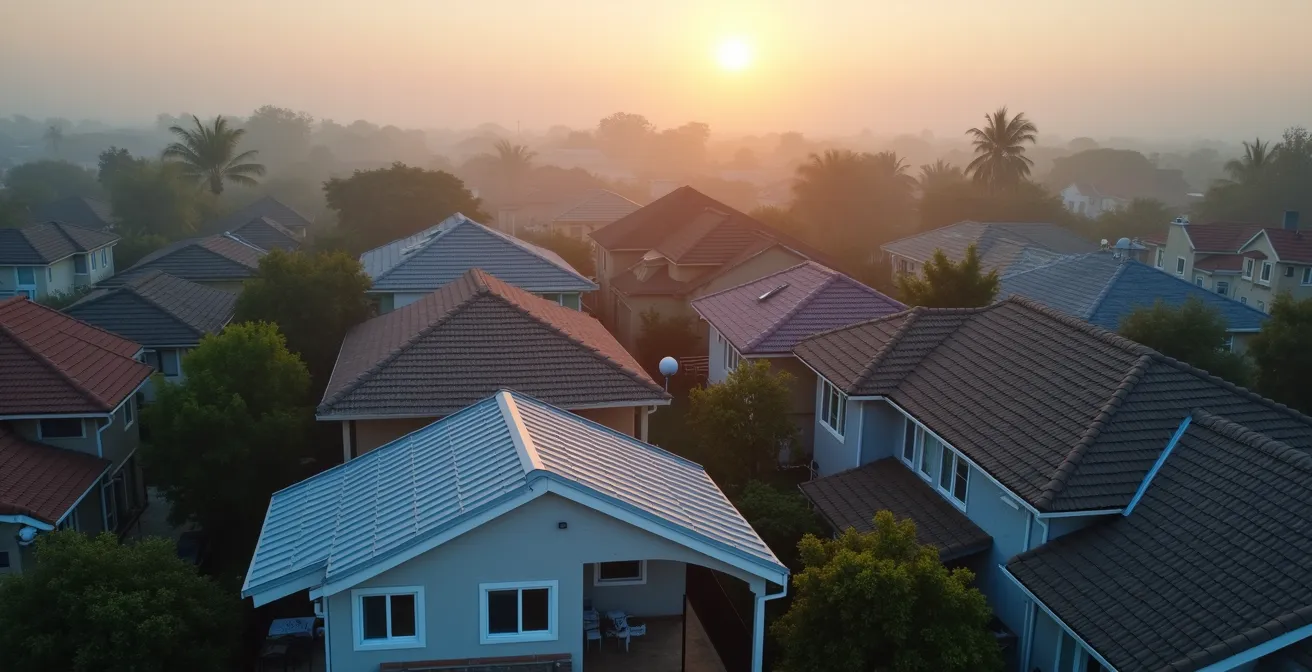
The primary signal they look for is widespread, uniform aging. This includes symptoms like extensive granule loss, widespread cracking or curling of shingles, and visible dark streaks from algae (gloeocapsa magma), which indicates moisture retention and shingle decay. Unlike isolated storm damage, which is often irregular, these signs of advanced age are consistent across the entire roof surface. When an underwriter sees this pattern, they no longer view the roof as a candidate for repair; they see it as a total system failure waiting to happen.
Receiving a non-renewal notice or a demand for replacement can be a shock. Your defense is the same proactive documentation protocol used to protect a single claim. Your “Roof Health Log,” with its chronological photos and videos, does more than just prepare you for a leak. It can be presented to the underwriter to argue for an extension or to demonstrate that the roof’s condition, while aged, is stable and actively monitored. It may not always prevent a non-renewal, but it provides you with a negotiation tool.
If your roof is over 15 years old, you must assume it is under scrutiny. Your documentation should focus on proving its continued integrity:
- Document Minor Repairs: Keep receipts and “before and after” photos for any replaced shingles or flashing repairs.
- Record Professional Inspections: If you hire a roofer for an assessment, file their written report, even if no work is needed. This shows proactive management.
- Establish a Condition Baseline: Your log demonstrates the roof’s condition has been stable, countering an insurer’s claim of rapid, recent deterioration.
By treating your aging roof as an asset to be managed and documented, you can better control the narrative with your insurer, potentially avoiding a forced replacement or a sudden loss of coverage.
When to Re-Caulk Windows: The 5-Year Cycle for Energy and Water?
Failed window caulking is a textbook example of a “gradual” problem that leads to catastrophic damage. The seal around a window is designed to last about five years. After that, it becomes brittle, cracks, and creates small gaps. Rainwater enters these gaps, not in a flood, but drop by drop. This slow, hidden water ingress saturates the wall sheathing and framing, leading to thousands of dollars in rot and mold repair. Because it happens over months or years, insurance companies will almost universally deny these claims, citing maintenance neglect.
The principle is clear: insurers deny claims from maintenance problems that have not been attended to. A slow leak from degraded caulking is the quintessential example. The cost differential is staggering: a $10 tube of caulk and an afternoon of work versus a $15,000 repair bill that you will pay out-of-pocket. Therefore, your evidence log must include a specific “Window Caulk Documentation Protocol.”
This protocol is simple but non-negotiable. Every five years, you must inspect and, if necessary, re-caulk your windows. The key is to document this process as if you were preparing for a court case. The goal is to create a timeline of evidence that proves you addressed this specific, predictable point of failure. If water damage later occurs from a different, “sudden and accidental” cause near that window (like a wind-driven branch breaking the glass), this documentation prevents the insurer from confusing the two issues and wrongly blaming the old caulking.
Your documentation protocol should include the following five steps:
- “Before” Photos: Take close-up, dated photos showing any cracked, peeling, or missing caulk.
- Material Receipts: Keep the receipt for the caulk and any tools purchased. File it with the photos.
- “In-Progress” Photos: A few photos showing the old caulk removed and the new bead being applied demonstrates the work was actually performed.
- “After” Photos: Take clear, dated photos of the clean, complete, and new sealant around the entire window frame.
- Log Entry: Add a “Window Re-caulking” entry to your annual maintenance checklist to ensure it is re-inspected consistently.
This small, disciplined effort creates a powerful defense. It shows you understand the lifecycle of your home’s components and are taking reasonable steps to maintain them, fulfilling your contractual obligation.
Key Takeaways
- Documentation is the Action: An undocumented repair or inspection does not exist in the eyes of an insurer. Your primary task is to create a time-stamped evidence log.
- Establish a Baseline: Chronological photos and videos of your home’s systems create a “condition baseline,” making it easier to prove that subsequent damage was “sudden.”
- Differentiate DIY and Pro: Your log must show both your own regular diligence (e.g., filter changes) and non-negotiable annual servicing by certified professionals (e.g., furnace, chimney).
- Convert Gradual to Sudden: The entire purpose of your compliance protocol is to provide the evidence needed to classify an event as “sudden and accidental,” which is covered, rather than “gradual,” which is not.
Why Gradual Leaks Are the Silent Killers of Home Insurance Claims?
The distinction between “gradual” and “sudden and accidental” damage is the most critical and least understood concept in home insurance. It is the battleground where most water damage claims are lost. A burst pipe that floods a basement is “sudden and accidental” and typically covered. A slow-leaking pipe fitting that seeps water for six months, causing rot and mold, is “gradual” and typically excluded. The financial implications are enormous, with the average costs of $13,954 for water damage claims falling on the homeowner if the cause is deemed gradual.
Insurance policies are written with precise, exclusionary language to address this. They will cover “sudden and accidental discharge of water” but explicitly exclude “continuous or repeated seepage or leakage of water… which occurs over a period of weeks, months, or years.” Without a maintenance log, any water damage discovered inside a wall or in a hidden area is presumed by the insurer to be gradual until you can prove otherwise. This is why a proactive documentation strategy is not optional; it is your only defense.
Emerging technology like smart leak detectors is beginning to change this dynamic. These small sensors, when placed near water heaters or under sinks, can provide an immediate, time-stamped alert the moment water appears. As one analysis notes, these sensors combined with an automatic shutoff valve can convert what might be classified as gradual damage into a documented, sudden event. This technology effectively creates an automated entry in your evidence log. While not yet a standard requirement, it demonstrates the principle: the faster an issue is identified and documented, the stronger your claim.
The table below breaks down how insurers interpret policy language for different types of water damage. Your goal is to use your maintenance log to move any potential claim out of the “Gradual” column and into the “Sudden” or “Detected” column.
| Damage Type | Policy Language | Coverage Status | Documentation Needed |
|---|---|---|---|
| Sudden Burst Pipe | ‘Sudden and accidental discharge’ | Typically Covered | Date/time of discovery |
| Slow Leak Over Months | ‘Continuous or repeated seepage’ | Typically Excluded | Maintenance records critical |
| Detected by Smart Sensor | ‘Immediate notification of water presence’ | May Convert to Covered | Sensor alert timestamp |
Ultimately, your insurance policy does not cover the consequences of deferred maintenance. Gradual leaks are silent financial threats precisely because they occur outside of your daily view. The procedural inspection and documentation protocols outlined in this guide are your primary tools to actively monitor for these threats and build the body of evidence necessary to prove your diligence and protect your property.